About This Image
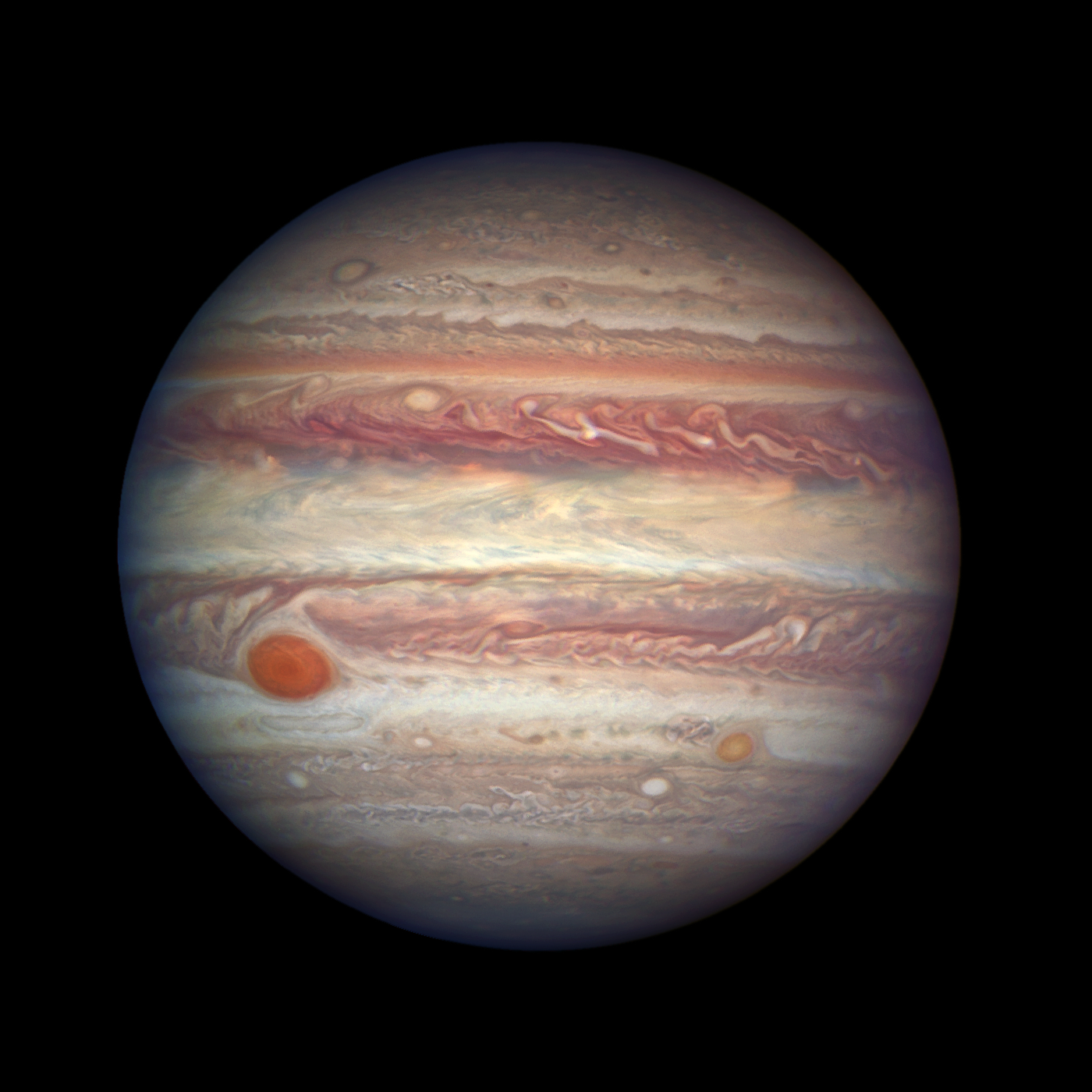
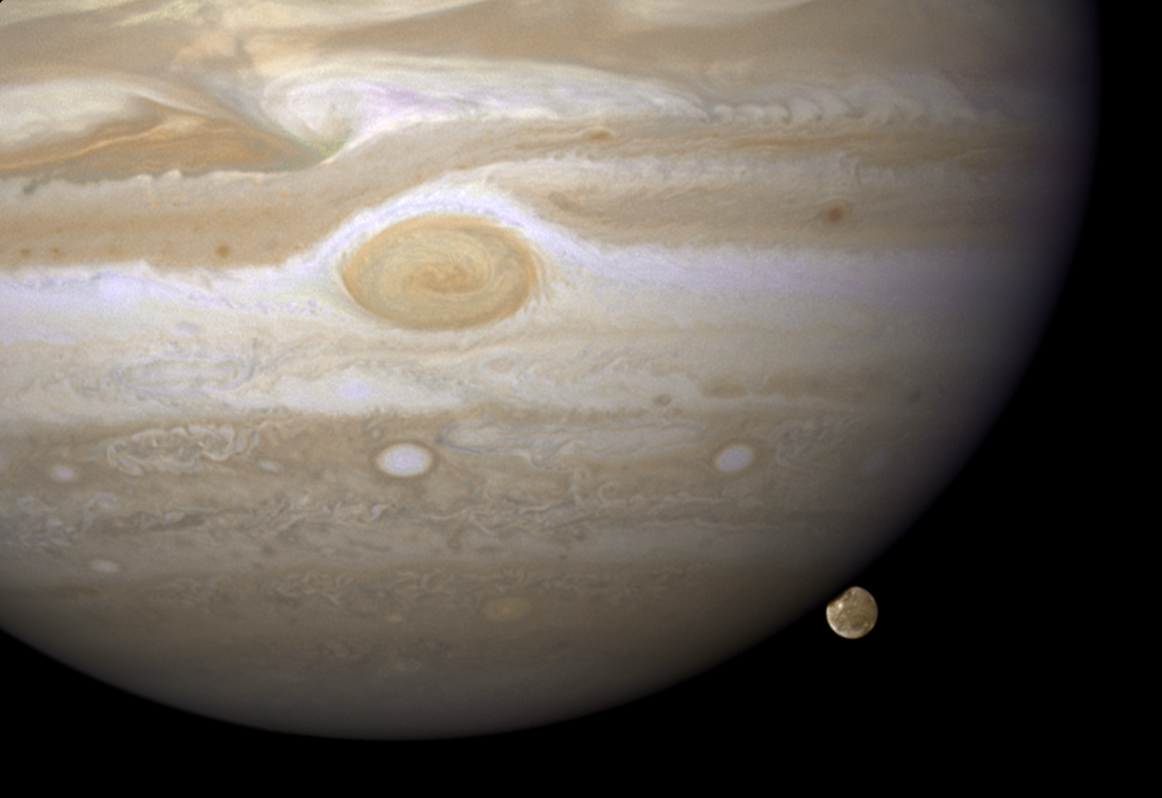
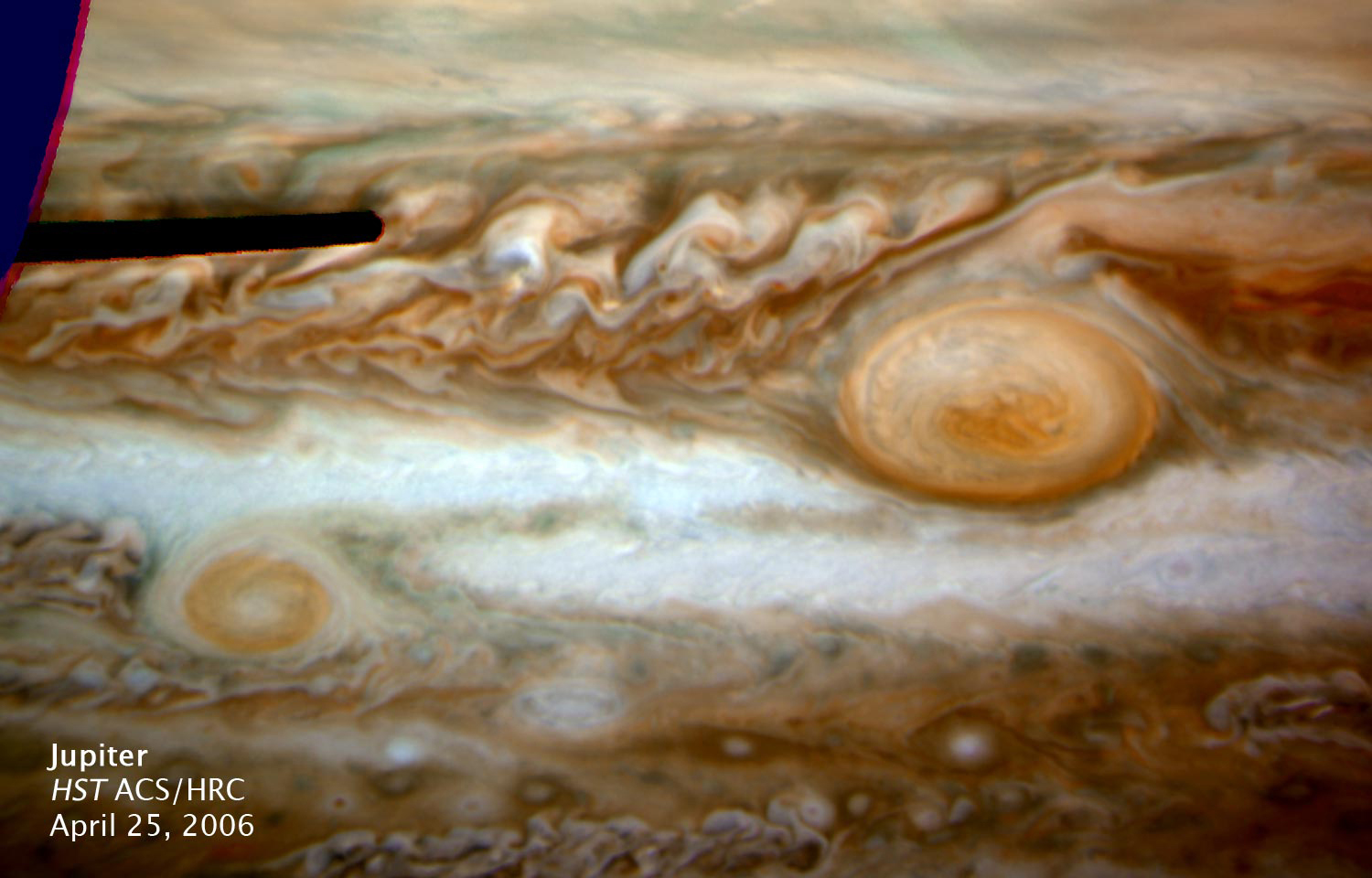
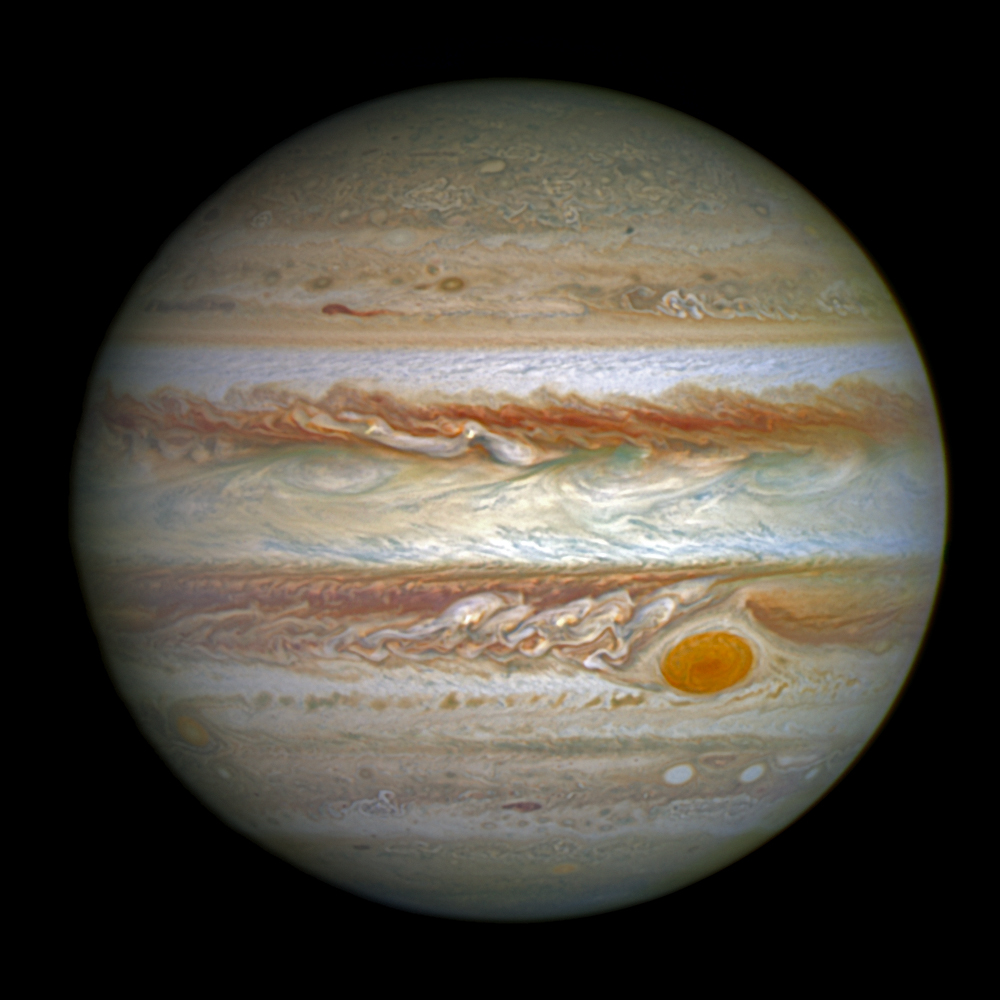
This image of Jupiter was captured as part of the Outer Planet Atmospheres Legacy (OPAL) program, a long-term initiative that uses Hubble to create annual global maps of the outer planets, building an invaluable archive of atmospheric changes over time. The Great Red Spot, the solar system's most iconic storm, appears in the lower right portion of Jupiter's disk. OPAL observations have revealed that this centuries-old anticyclone continues to slowly shrink while also exhibiting unexpected changes in shape, becoming more circular over time. The image also captures the rich detail of Jupiter's banded cloud structure, with alternating zones of rising ammonia ice clouds and darker belts of sinking, chemically processed gas. Smaller vortices, wave patterns, and turbulent eddies are visible throughout the atmosphere, demonstrating the extraordinary complexity of Jupiter's weather systems driven by the planet's immense internal heat source and rapid 10-hour rotation.
Scientific Significance
The OPAL program represents one of Hubble's most valuable long-term monitoring campaigns for planetary science. By capturing global maps of Jupiter at consistent resolution and wavelength coverage year after year, OPAL provides a baseline for understanding atmospheric variability on timescales from weeks to decades. These observations have documented the continued shrinking of the Great Red Spot, the emergence and evolution of new storms, and subtle changes in the widths and colors of Jupiter's atmospheric bands. The annual maps also enable detection of rare atmospheric events such as impacts by comets or asteroids, which can occur without warning and require rapid follow-up. OPAL data complement spacecraft observations from Juno (in orbit since 2016) by providing the global context that the close-orbiting probe cannot capture with its narrow field of view.
Observation Details
This global map was assembled from multiple exposures taken with Hubble's Wide Field Camera 3 (WFC3) using broadband visible-light filters. Because Jupiter rotates once every 10 hours, a complete global map can be assembled from observations spanning just one rotation period, with individual frames captured at regular intervals and combined into a cylindrical projection. The OPAL methodology ensures consistent photometric calibration across epochs, enabling quantitative comparison of cloud brightness, color, and structure from year to year.
Location in the Universe
Constellation
N/A (Solar System)
Distance from Earth
365 million to 601 million miles (varies)
Fun Facts
- 1
The OPAL program has been monitoring Jupiter annually since 2014, building the most comprehensive long-term record of changes in the gas giant's atmosphere ever assembled from a single instrument platform.
- 2
Jupiter's Great Red Spot has been observed continuously since at least 1831, and possibly as far back as 1665 — making it the longest-lived storm known in the solar system, though it has been shrinking noticeably in recent decades.
- 3
Jupiter's atmosphere contains winds reaching speeds of 400 mph, but the planet has no solid surface — the gaseous atmosphere gradually transitions to liquid hydrogen and eventually metallic hydrogen at extreme pressures deep within the planet.
Image credit: NASA, ESA, Hubble Space Telescope