About This Image
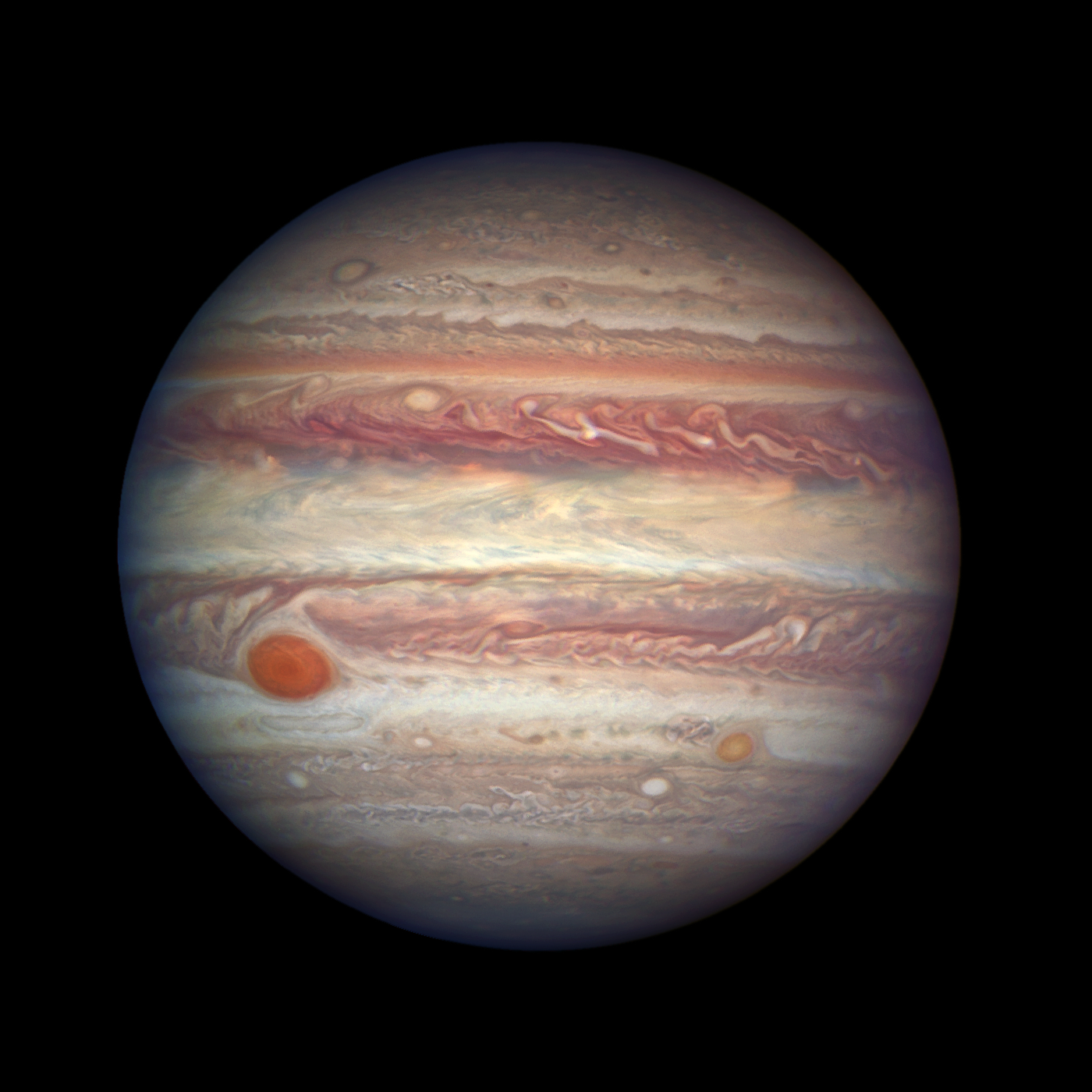
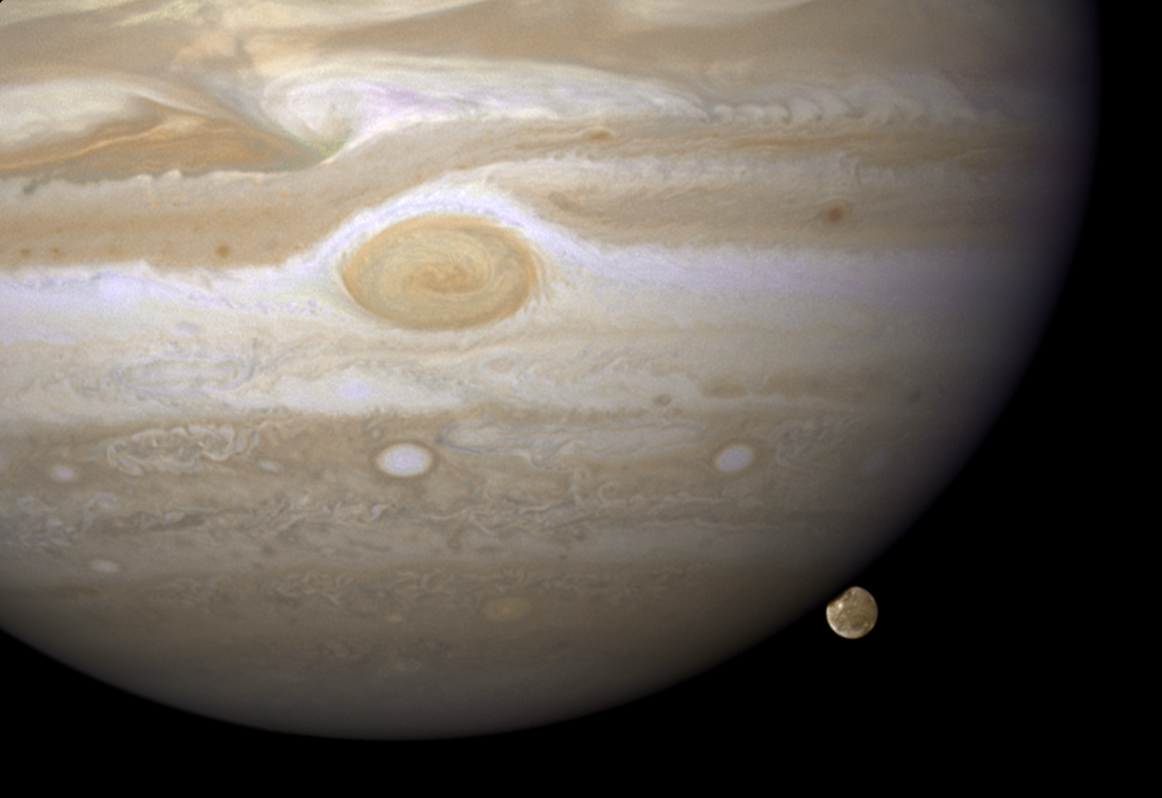
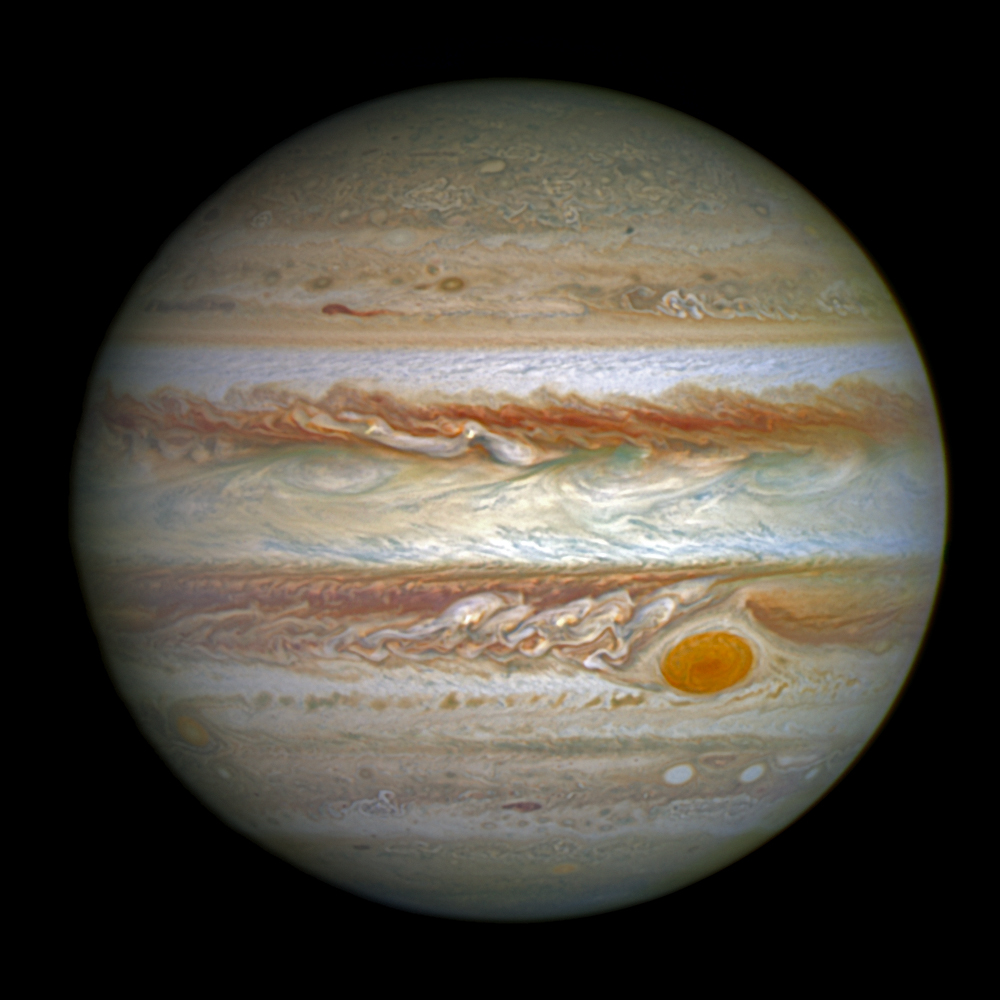
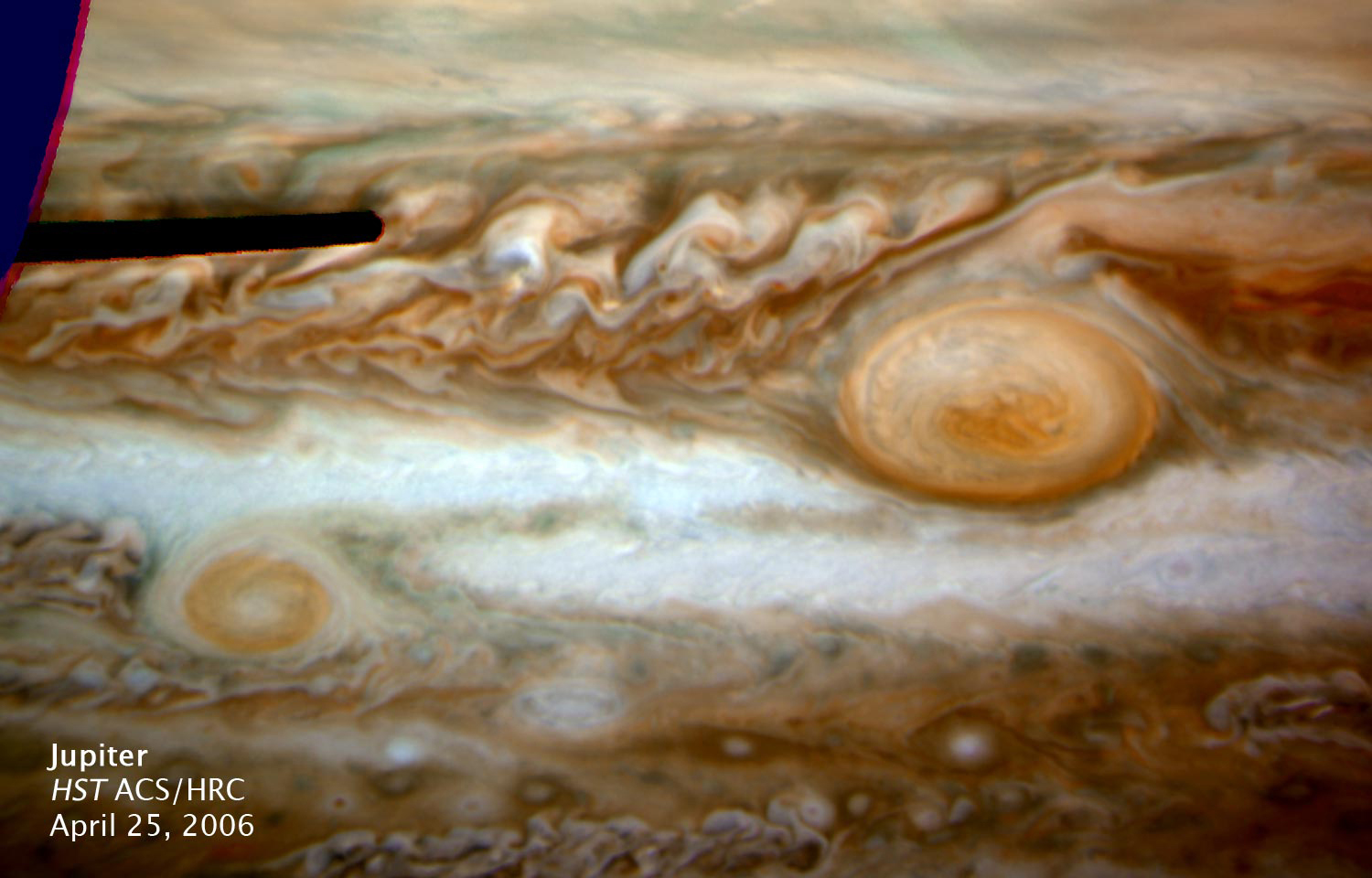
This striking Hubble image captures a historic moment in Jupiter's atmospheric history: the emergence of a second major red storm system alongside the planet's famous Great Red Spot. The new storm, officially designated Oval BA but quickly nicknamed "Red Spot Jr.," appears in the lower left of the image, while the larger and more ancient Great Red Spot dominates the right side. Oval BA formed in 2000 through the merger of three smaller white storms that had been tracked since the 1930s, but in late 2005 it unexpectedly turned red, developing the same characteristic color as its larger cousin. At roughly half the diameter of the Great Red Spot, Red Spot Jr. is still an enormous anticyclonic vortex large enough to swallow the entire Earth. The mechanism behind the color change remains debated, with leading theories suggesting that the intensifying storm dredges up chemical compounds from deeper atmospheric layers that redden when exposed to solar ultraviolet radiation.
Scientific Significance
The emergence of Red Spot Jr. provided an unprecedented natural experiment for understanding the dynamics and chemistry of giant planetary atmospheres. The merger of three long-lived white ovals into a single vortex and its subsequent color change gave astronomers a rare opportunity to study storm evolution in real time. The leading hypothesis for the reddening involves the vortex strengthening to the point where its updrafts reach higher into Jupiter's atmosphere, lofting ammonia ice and other compounds into the upper troposphere where ultraviolet photolysis converts them into chromophore molecules. The interaction between the two red spots as they pass each other has provided data on vortex dynamics and the stability of Jupiter's zonal wind pattern. These observations are directly relevant to understanding atmospheric dynamics on exoplanets, where storms of even greater magnitude may exist.
Observation Details
This image was captured using Hubble's Advanced Camera for Surveys (ACS) in multiple visible-light filters to produce a natural-color composite. The observations were carefully timed to capture both red spots simultaneously on the visible hemisphere of Jupiter. Short exposure times were necessary to freeze Jupiter's rapid rotation. Multiple wavelength observations were used to probe different altitudes in the atmosphere, with blue and ultraviolet light sensing higher-altitude features and red light penetrating to deeper cloud layers. The resulting color composite reveals the subtle variations in cloud color and altitude that distinguish the two red storms from the surrounding atmospheric bands.
Location in the Universe
Constellation
N/A (Solar System)
Distance from Earth
365 million to 601 million miles (varies)
Fun Facts
- 1
Oval BA formed from three smaller white storms called BC, DE, and FA that had been observed since the 1930s — they gradually merged over several years, with the final merger completing in 2000, creating a single large vortex.
- 2
When Oval BA turned red in late 2005, it was the first time in recorded astronomical history that a second major red storm had been observed on Jupiter — scientists are still debating what causes the distinctive red coloration.
- 3
Despite being 'only' half the size of the Great Red Spot, Red Spot Jr. is still enormous by terrestrial standards — its diameter exceeds that of Earth, and its wind speeds reach over 400 miles per hour.
Image credit: NASA, ESA, Hubble Space Telescope