About This Image
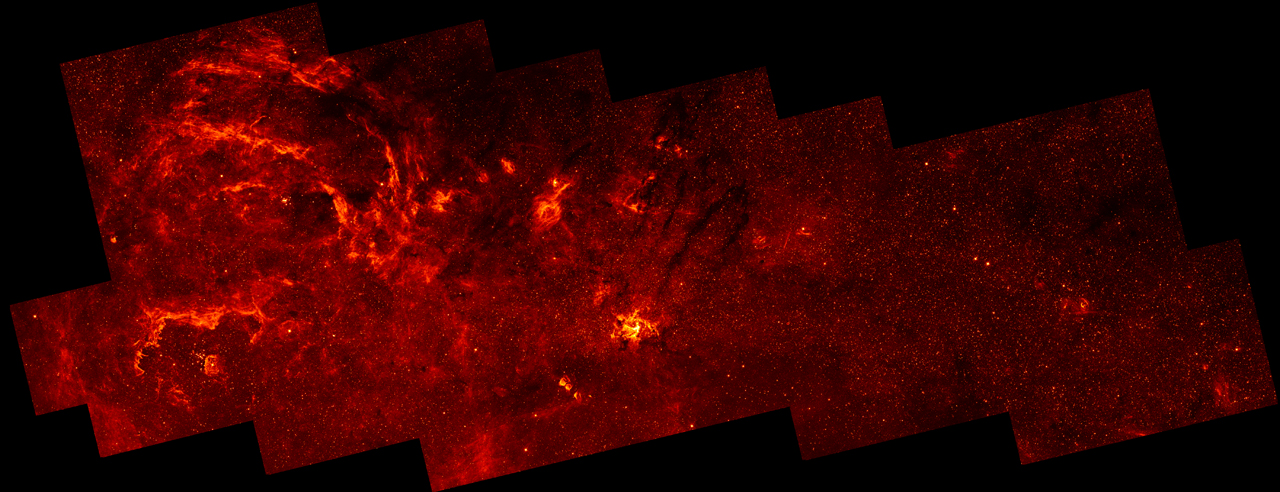
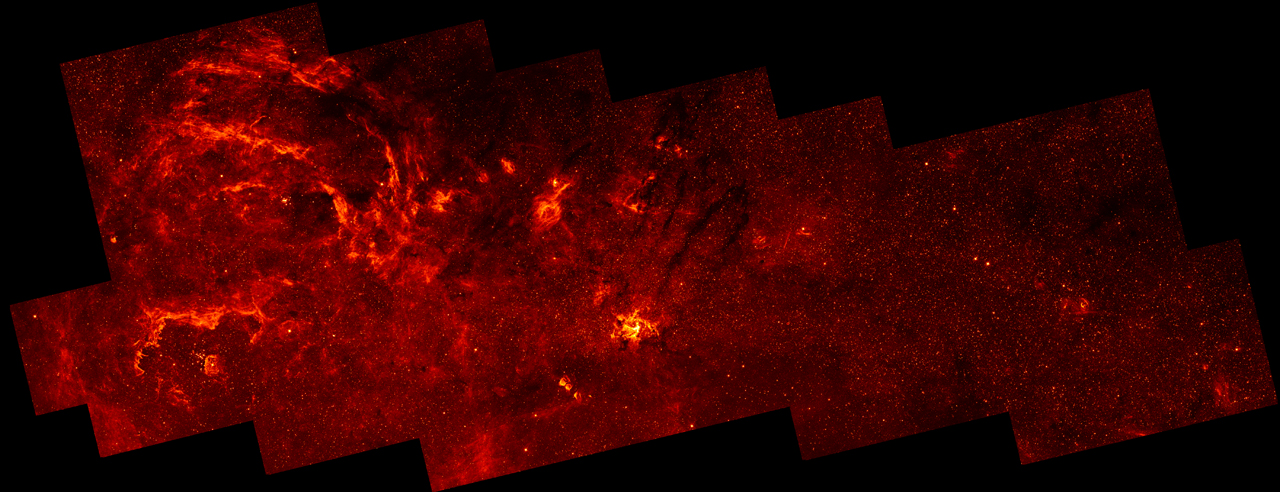
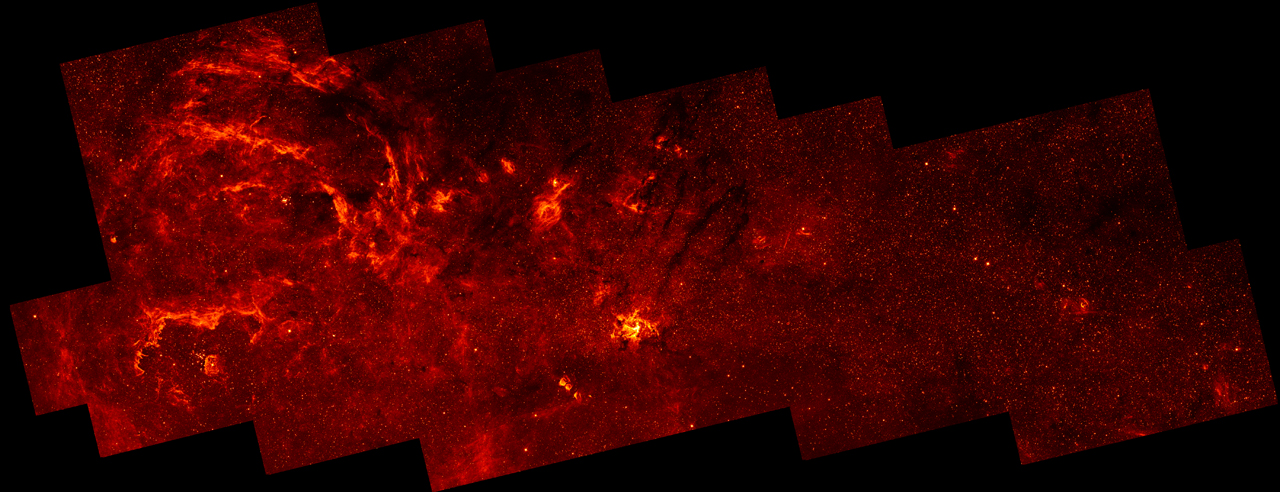
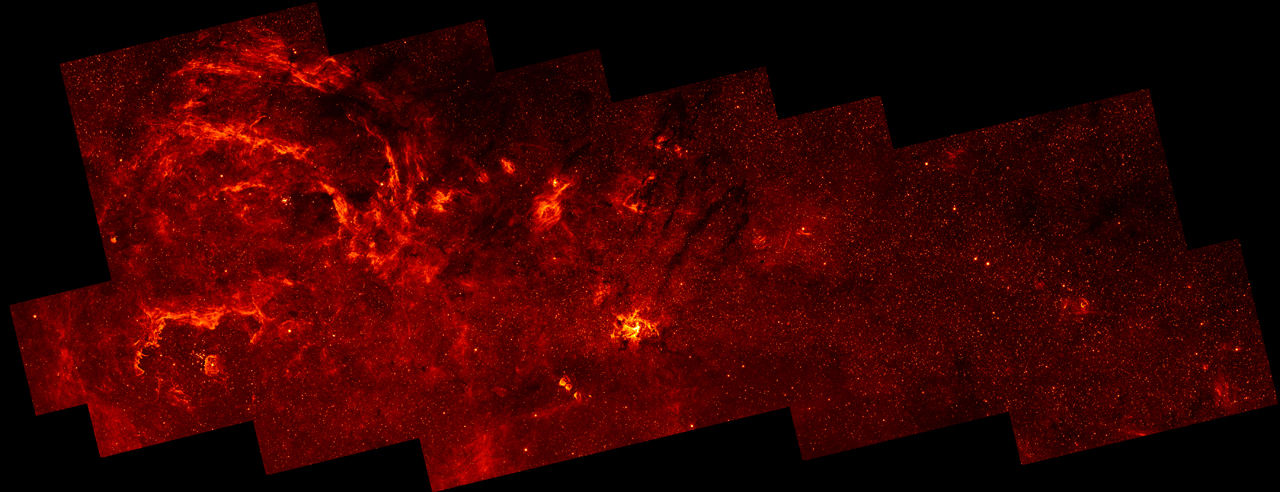
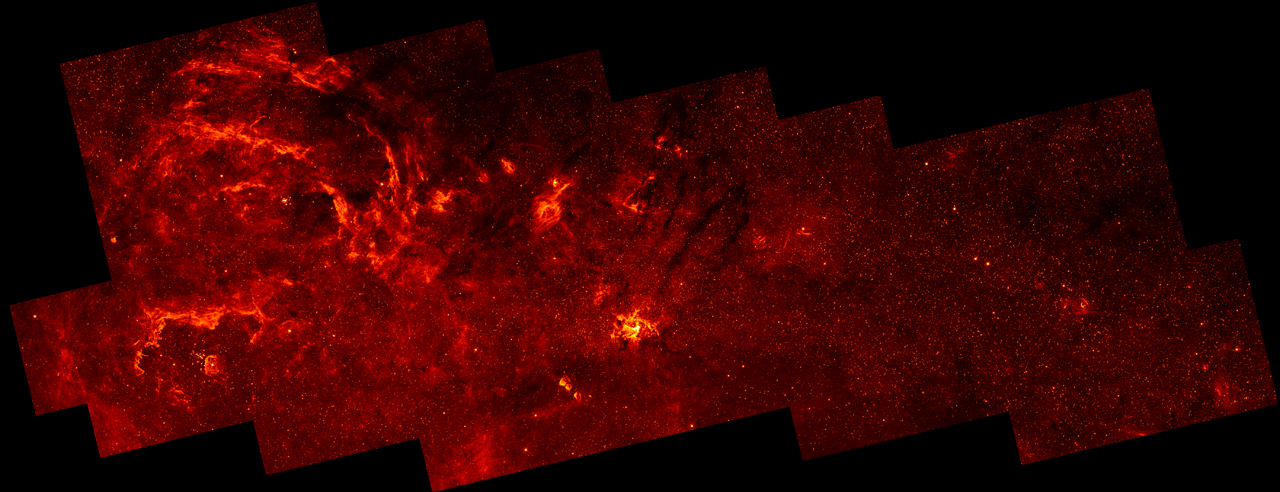
This infrared view of the galactic center highlights the Quintuplet Cluster, one of the most massive and luminous young star clusters in the entire Milky Way. Named for its five brightest infrared sources, the Quintuplet Cluster contains hundreds of stars and is estimated to be only about four million years old. Despite its youth, the cluster already harbors some of the most extreme stars known, including the Pistol Star, one of the most luminous stars in the galaxy, which shines with the brilliance of ten million Suns. Located just 100 light-years in projection from the supermassive black hole Sagittarius A*, the Quintuplet Cluster exists in one of the most extreme environments in the galaxy, where intense tidal forces, powerful radiation fields, and dense molecular clouds create conditions unlike anywhere else in the Milky Way.
Scientific Significance
The Quintuplet Cluster is a critical object for understanding massive star formation and evolution in extreme galactic environments. Its location near the galactic center — where gas densities, radiation fields, tidal forces, and magnetic fields far exceed those in the solar neighborhood — makes it a test case for whether star formation proceeds differently under such extreme conditions. Studies of the Quintuplet's stellar mass function suggest that massive star formation near the galactic center may produce a top-heavy initial mass function, meaning proportionally more massive stars form there than in typical environments. This has profound implications for the chemical enrichment and energy budget of galactic nuclei. The cluster also hosts several enigmatic objects, including luminous blue variables and Wolf-Rayet stars, all representing brief but spectacular phases of massive stellar evolution.
Observation Details
The Quintuplet Cluster was observed using Hubble's Near Infrared Camera and Multi-Object Spectrometer (NICMOS) in multiple infrared filters, essential for penetrating the approximately 30 magnitudes of visual extinction caused by intervening dust. The infrared observations resolved individual stars within the cluster, enabling construction of color-magnitude diagrams that revealed the cluster's age, mass function, and evolutionary state. NICMOS also detected the Pistol Nebula surrounding the Pistol Star, mapping its structure in hydrogen emission lines. These observations complemented ground-based adaptive optics imaging and spectroscopy that provided radial velocities and spectral classifications for the cluster's most massive members.
Location in the Universe
Constellation
Sagittarius
Distance from Earth
26,000 light-years
Fun Facts
- 1
The Quintuplet Cluster contains the Pistol Star, which is so luminous that it radiates as much energy in 20 seconds as our Sun does in an entire year — making it one of the most powerful stars ever discovered.
- 2
The cluster is named for its five brightest infrared members, which were among the first individual objects resolved near the galactic center using early infrared detectors in the 1980s and 1990s.
- 3
Despite being only 100 light-years from the Milky Way's central supermassive black hole, the Quintuplet Cluster remains gravitationally bound — but tidal forces are gradually stripping stars from its outer edges.
Image credit: NASA, ESA, Hubble Space Telescope