About This Image
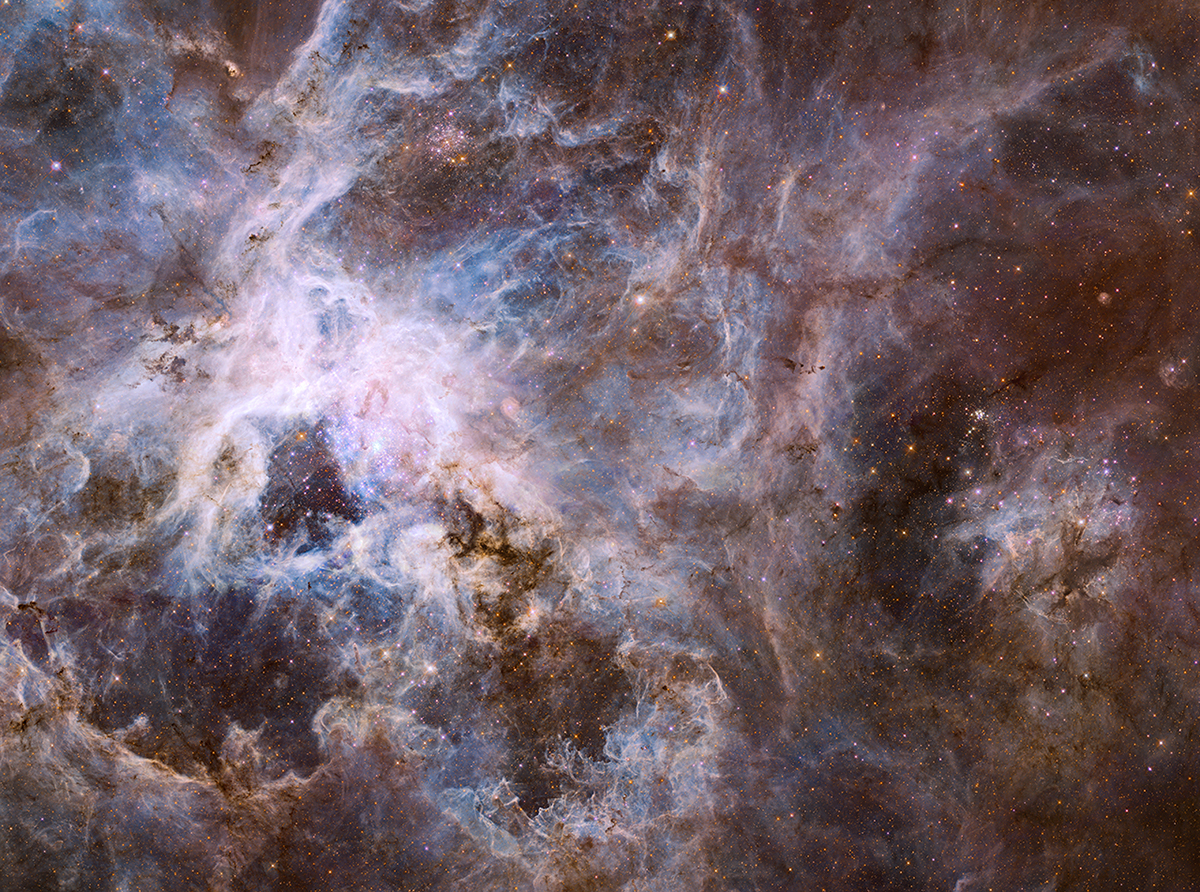
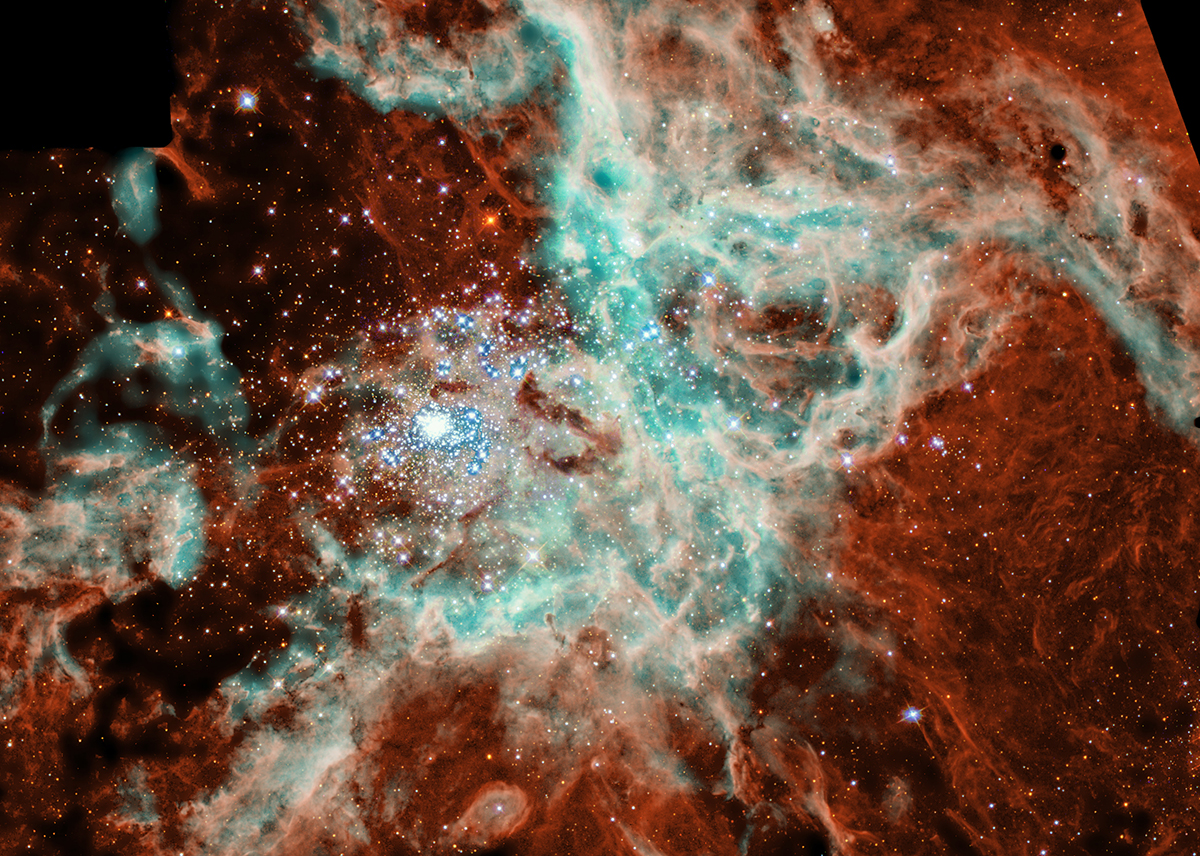
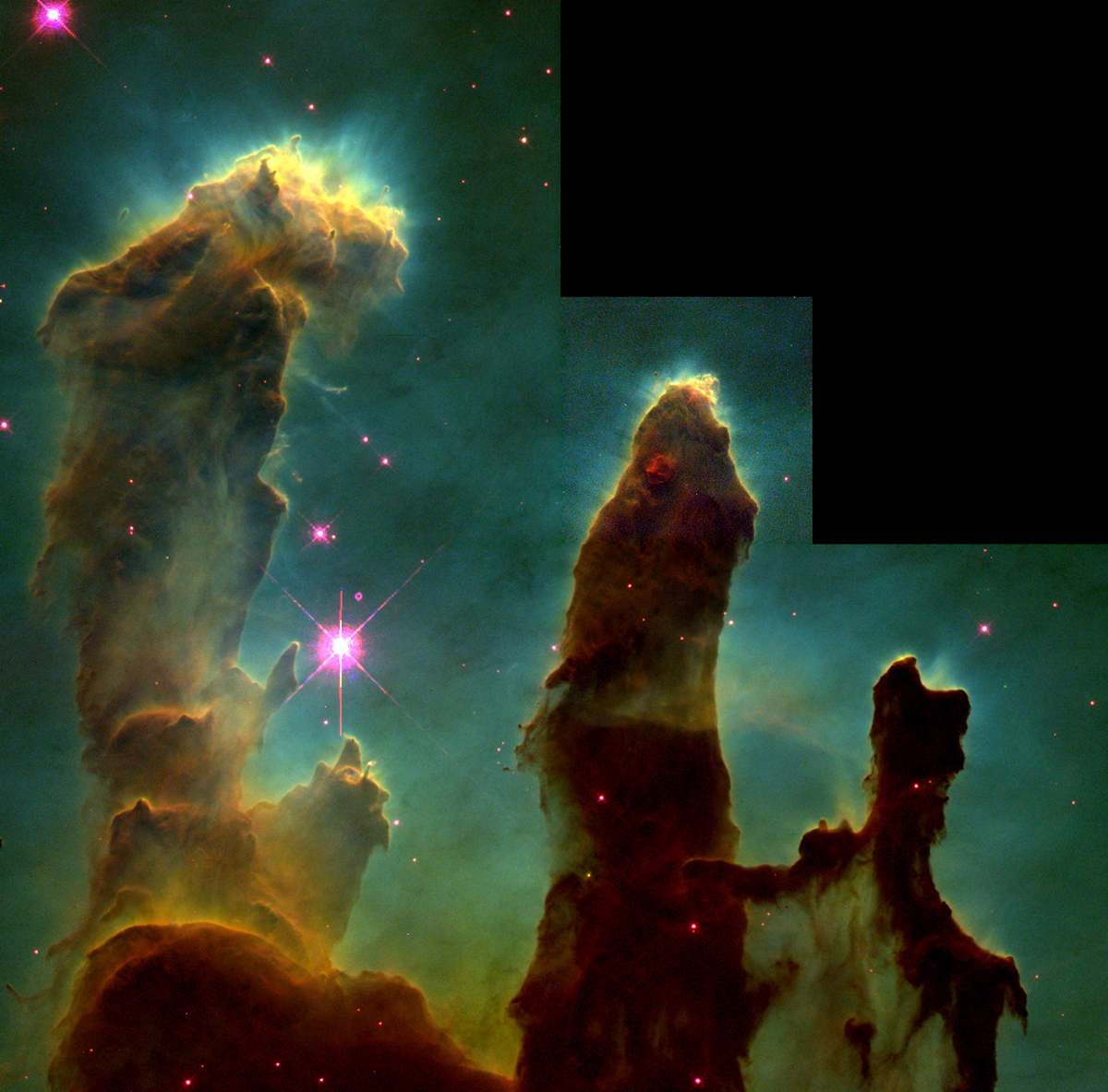
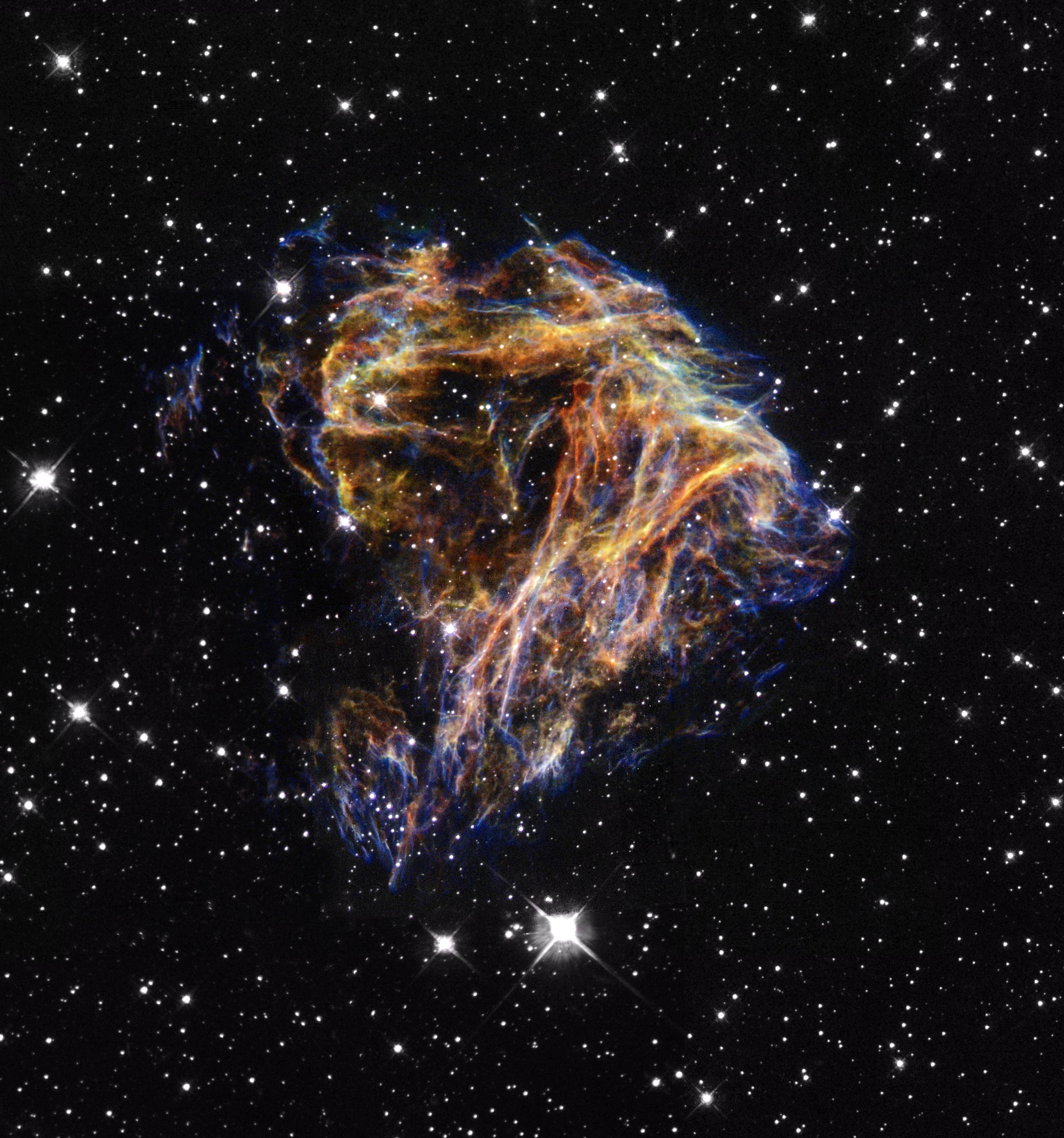
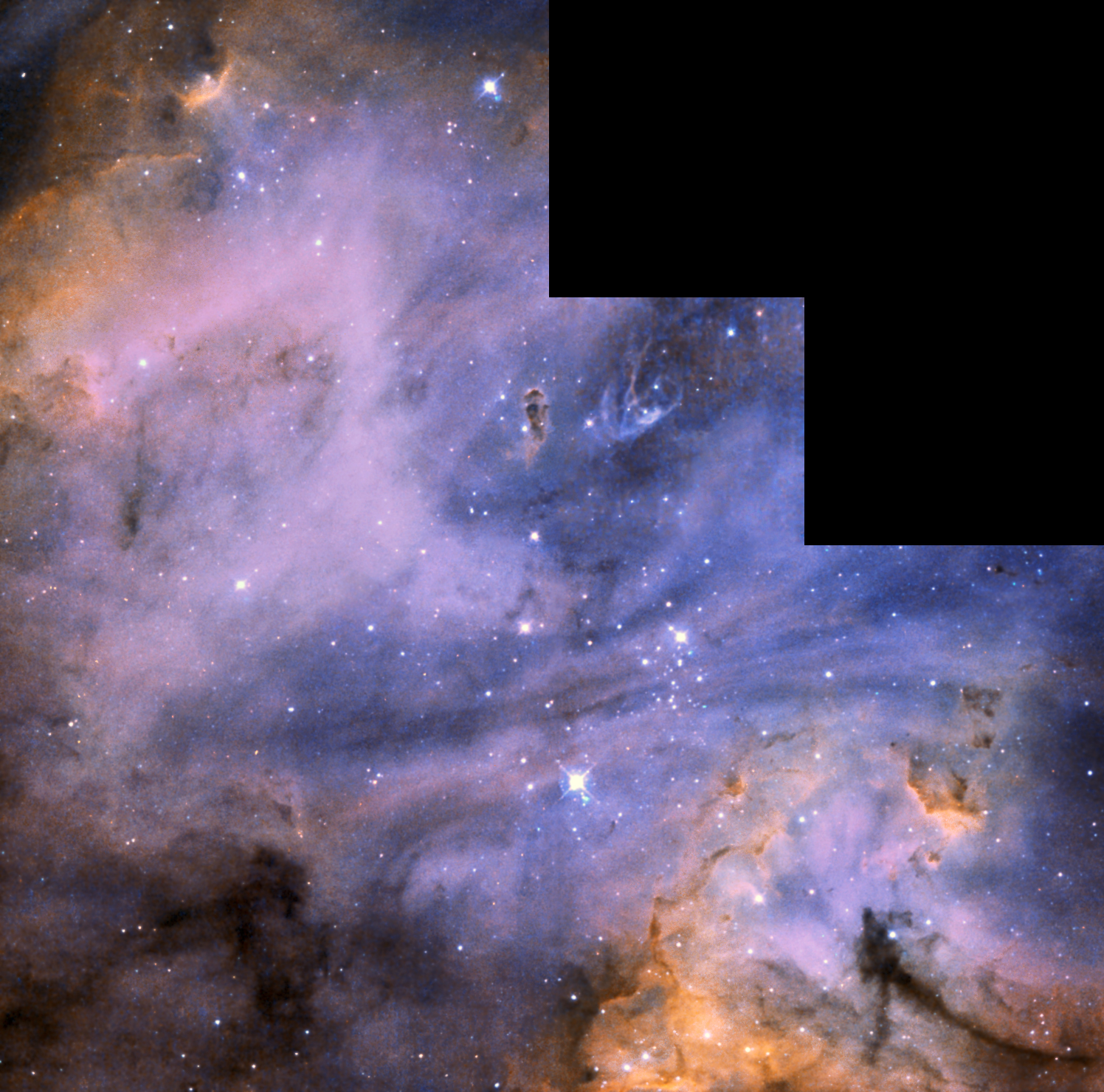
N 180B is a luminous emission nebula and active stellar nursery located in the Large Magellanic Cloud, a dwarf galaxy in orbit around our Milky Way approximately 170,000 light-years away. This Hubble image reveals a landscape shaped by the fierce energy output of newborn massive stars, whose intense ultraviolet radiation ionizes the surrounding hydrogen gas and sculpts it into dramatic pillars, ridges, and cavities. The nebula hosts some of the brightest and most massive young star clusters known in the LMC, with individual stars tens of times more massive than our Sun. Dark silhouettes of dense molecular globules — potential sites of future star formation — stand out against the glowing background gas. The interplay between stellar radiation and the surrounding interstellar material drives a continuous cycle of destruction and creation, as old gas clouds are eroded even as compressed regions collapse to form new stars.
Scientific Significance
N 180B provides astronomers with a detailed view of how massive stars form and interact with their birth environment in a galaxy with roughly half the heavy-element abundance of the Milky Way. This lower metallicity affects virtually every aspect of the star formation process: molecular clouds are warmer, dust shielding is less effective, and stellar winds and radiation have different impacts on the surrounding gas. By comparing star formation in N 180B with similar regions in the Milky Way, astronomers can isolate the effects of metallicity on the initial mass function — the distribution of stellar masses at birth — which is a fundamental parameter governing galaxy evolution. The bright young clusters in N 180B also serve as benchmarks for calibrating distance indicators and testing stellar evolution models at sub-solar metallicity.
Observation Details
This image was captured using Hubble's Wide Field and Planetary Camera 2 (WFPC2) through a combination of broadband and narrowband filters. The narrowband hydrogen-alpha filter highlights the ionized gas illuminated by embedded massive stars, while broadband filters capture the stellar continuum emission. Hubble's resolution enabled astronomers to identify individual massive stars within the dense clusters and to resolve the detailed structure of the ionized gas fronts, dark globules, and pillar-like features that characterize the interface between the HII region and the surrounding molecular cloud.
Location in the Universe
Constellation
Dorado
Distance from Earth
170,000 light-years
Fun Facts
- 1
The Large Magellanic Cloud, home to N 180B, is visible to the naked eye from the Southern Hemisphere and has been known to indigenous peoples of the southern lands for thousands of years before European astronomers cataloged it.
- 2
N 180B contains compact dark globules so dense they block virtually all light from behind them, and some of these globules are thought to be in the process of collapsing to form new stars right now.
- 3
The lower metallicity of the Large Magellanic Cloud means that star formation in N 180B proceeds under chemical conditions more similar to the early universe than to most regions of the Milky Way.
Image credit: NASA, ESA, Hubble Space Telescope