About This Image
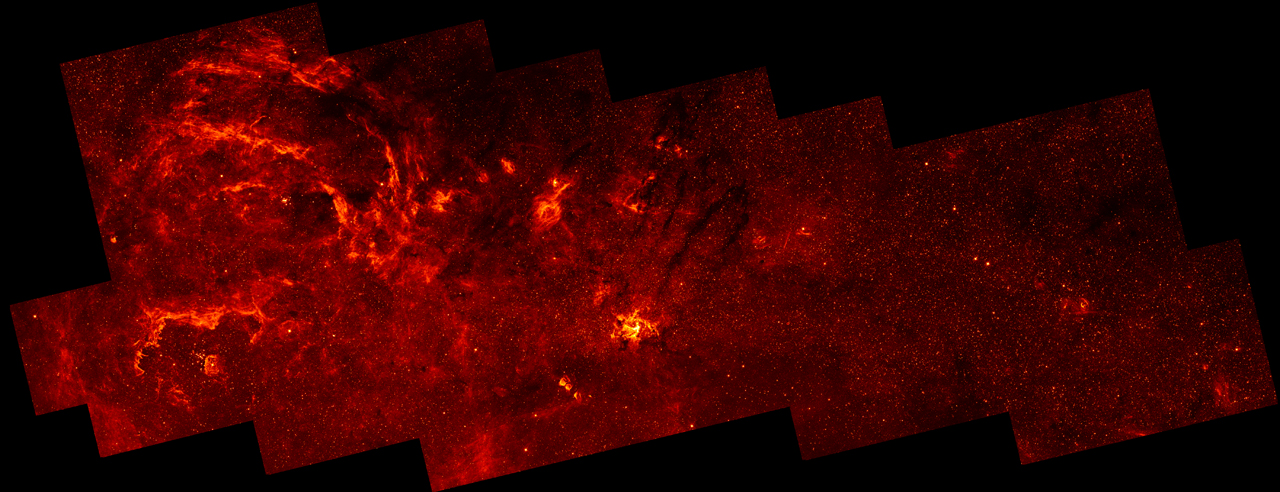
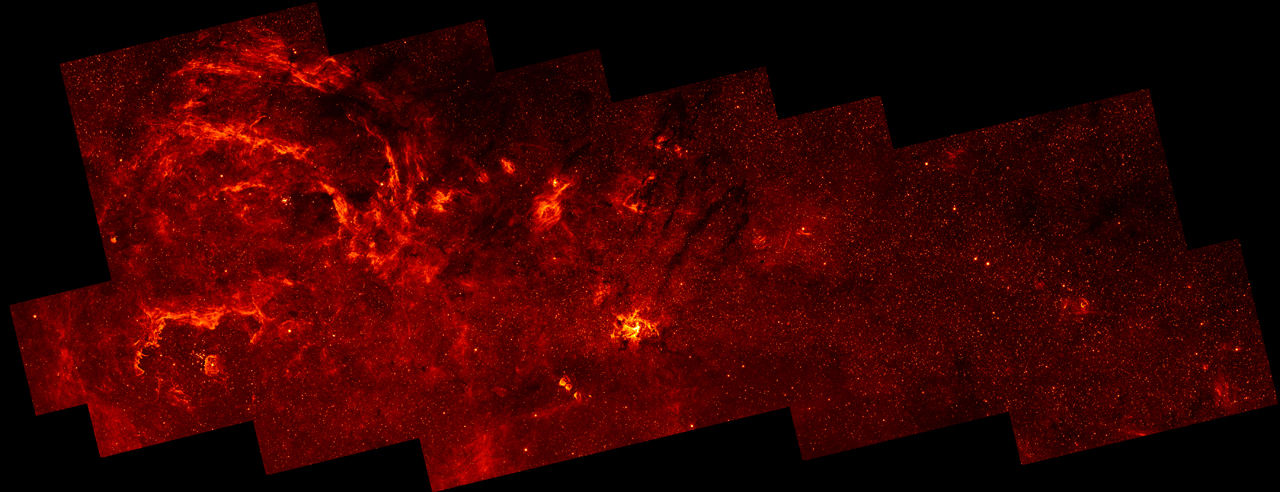
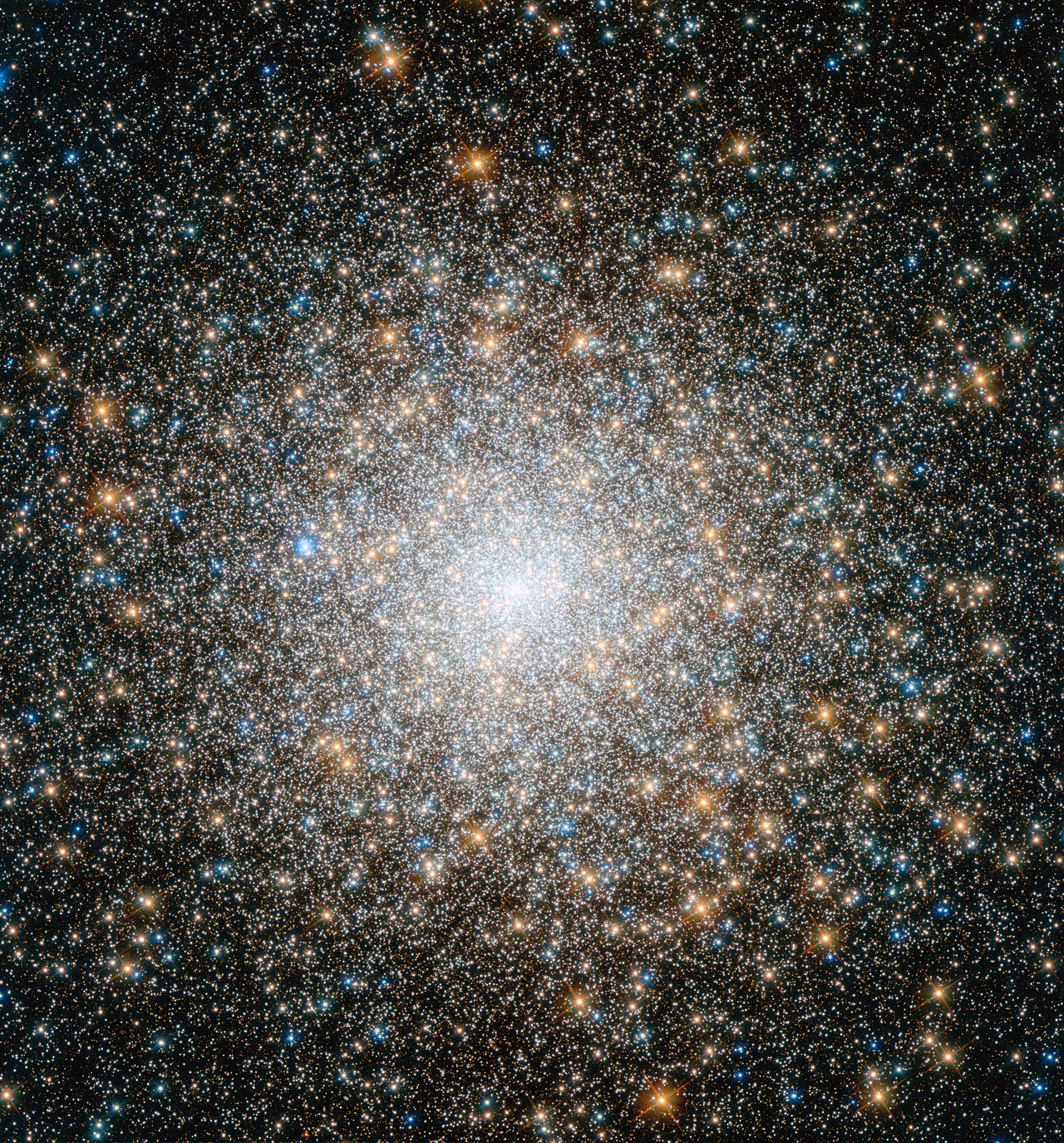
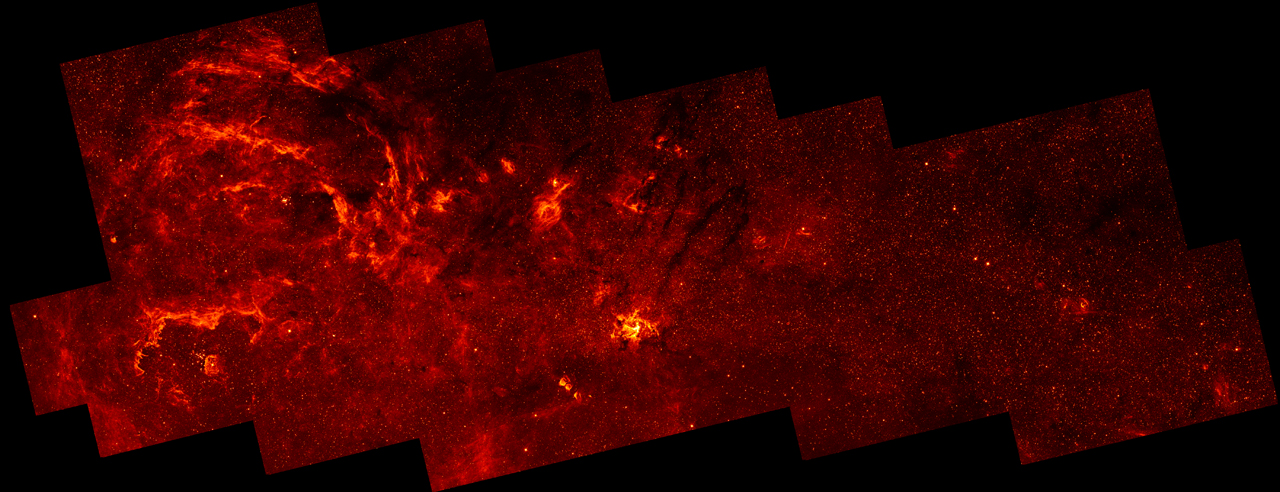
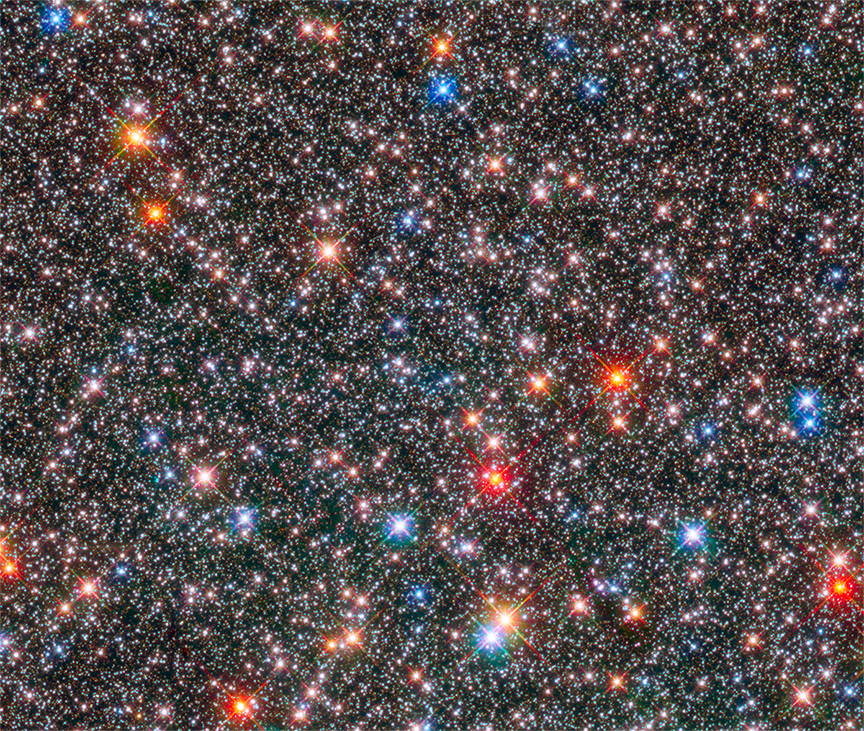
These colorful stars reside at the heart of our Milky Way galaxy, approximately 26,000 light-years from Earth, in one of the most densely packed stellar environments in the entire galaxy. Aging red-giant stars, swollen to enormous sizes as they exhaust their nuclear fuel, coexist with their more plentiful younger cousins, the smaller white and blue Sun-like stars, in this extraordinarily crowded region of our galaxy's central hub, known as the nuclear star cluster. This cluster contains an estimated 10 million solar masses of stars packed into a volume just a few light-years across. The diversity of stellar colors reveals a complex star formation history spanning billions of years, with multiple generations of stars born under the extreme conditions near the Milky Way's supermassive black hole.
Scientific Significance
The nuclear star cluster of the Milky Way is the nearest example of the dense stellar concentrations found at the centers of most galaxies, making it the premier laboratory for studying the formation and evolution of nuclear star clusters. By resolving individual stars and measuring their colors and luminosities, astronomers can reconstruct the cluster's star formation history, revealing when major episodes of star formation occurred and how the cluster grew over cosmic time. Hubble observations have shown that the nuclear cluster contains stars spanning a wide range of ages, from ancient red giants more than 10 billion years old to young blue stars only a few million years old, indicating that star formation near the black hole has been an ongoing process rather than a single event. Understanding the stellar demographics of our galaxy's nuclear cluster is essential for interpreting unresolved nuclear clusters in more distant galaxies.
Observation Details
This image was captured using Hubble's Wide Field Camera 3 (WFC3) infrared channel at wavelengths between 1.05 and 1.53 micrometers. The infrared observations penetrate the heavy dust extinction along the line of sight to the galactic center, revealing thousands of individual stars that are invisible at optical wavelengths. The color information was constructed by assigning blue, green, and red to different infrared filters, creating a false-color image where stellar colors reflect actual differences in surface temperature and evolutionary state. Hubble's angular resolution of approximately 0.1 arcseconds was critical for resolving individual stars in this extremely crowded field.
Location in the Universe
Constellation
Sagittarius
Distance from Earth
26,000 light-years
Fun Facts
- 1
In the nuclear star cluster shown here, the average distance between neighboring stars is only a few hundred times the Earth-Sun distance — roughly 100 times closer together than stars in the Sun's neighborhood, making close stellar encounters relatively common.
- 2
The red giant stars visible in this image are in the final stages of their lives, having swollen to diameters hundreds of times that of the Sun, and their powerful stellar winds contribute to a hot, diffuse medium of gas that feeds the central black hole.
- 3
Hubble can only observe this crowded region in infrared light because the 26,000 light-years of intervening gas and dust dims visible light by a factor of more than a trillion, turning what would be a dazzling star field into apparent emptiness at optical wavelengths.
Image credit: NASA, ESA, Hubble Space Telescope