About This Image
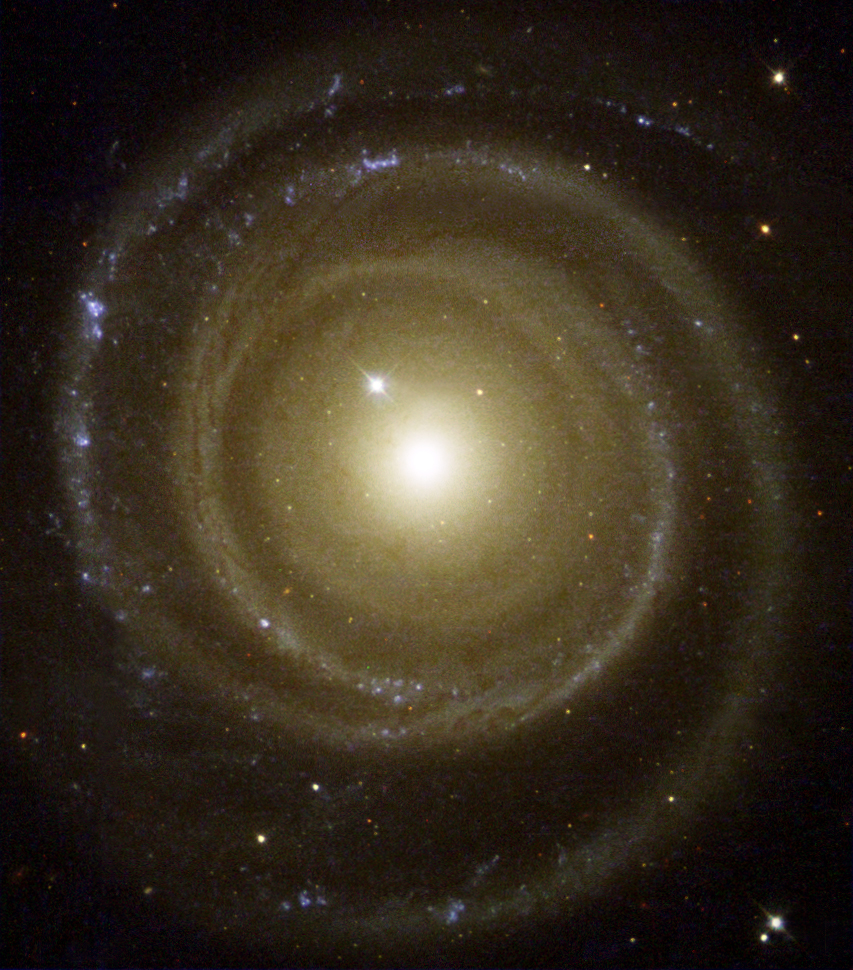
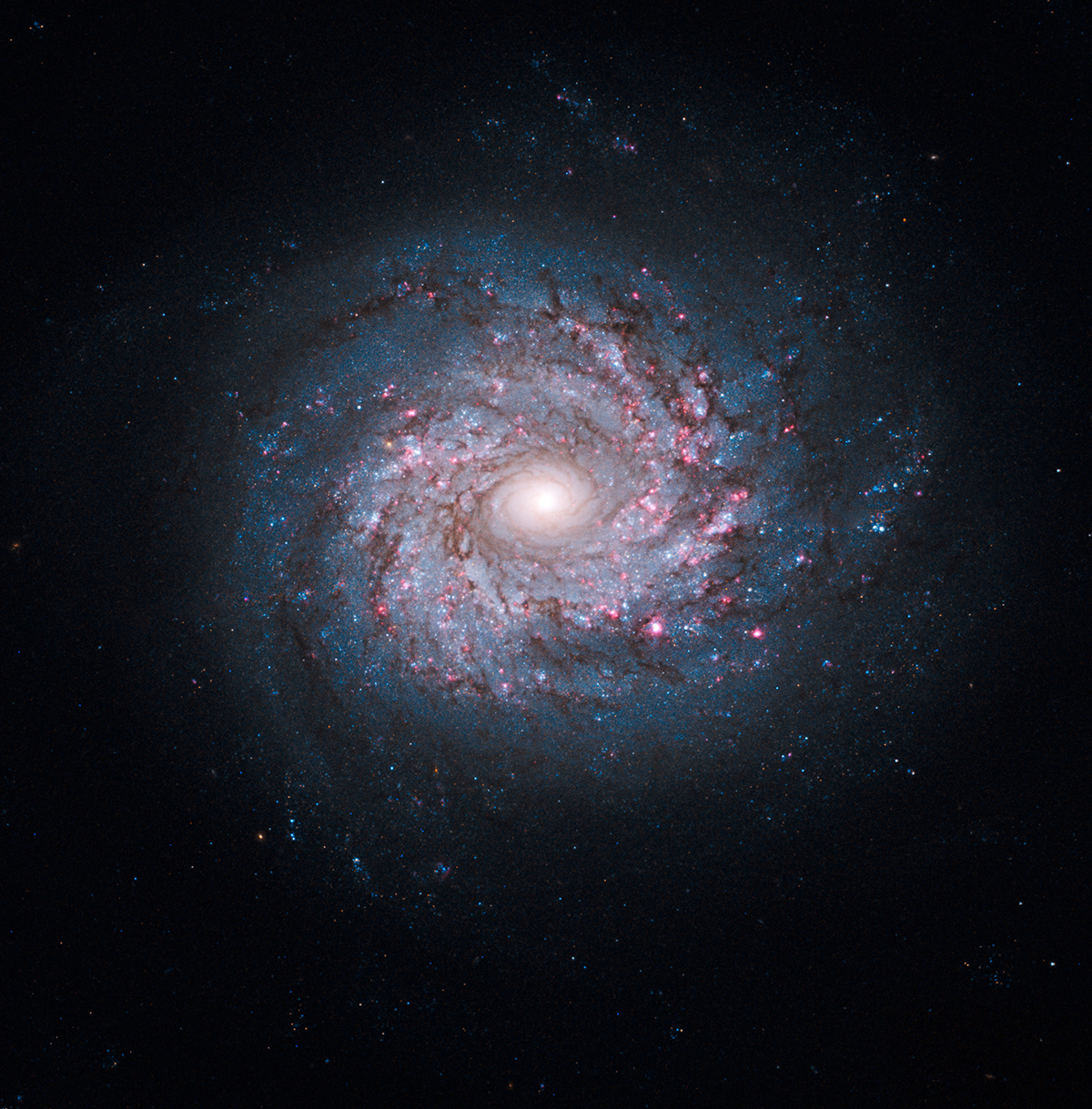
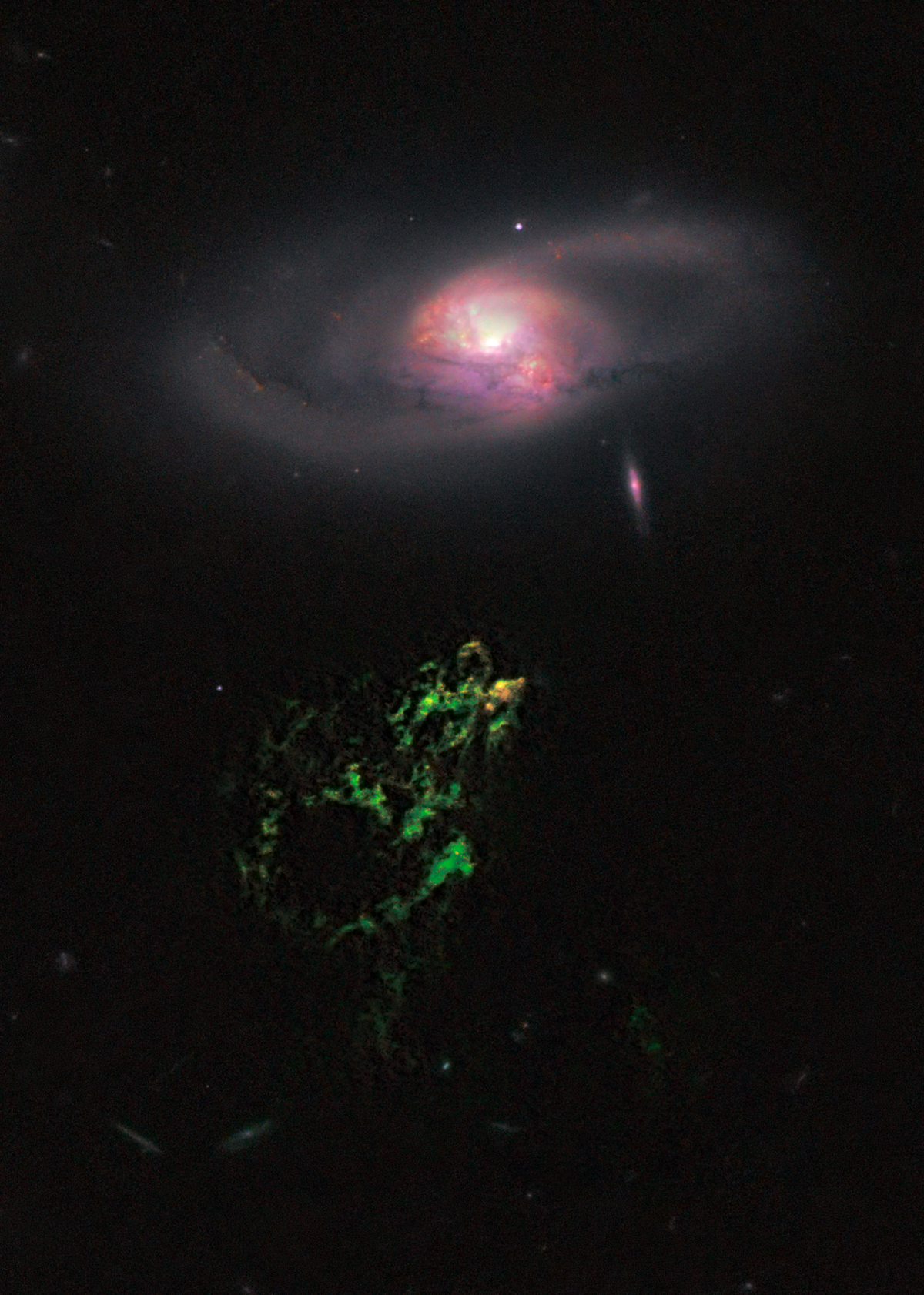
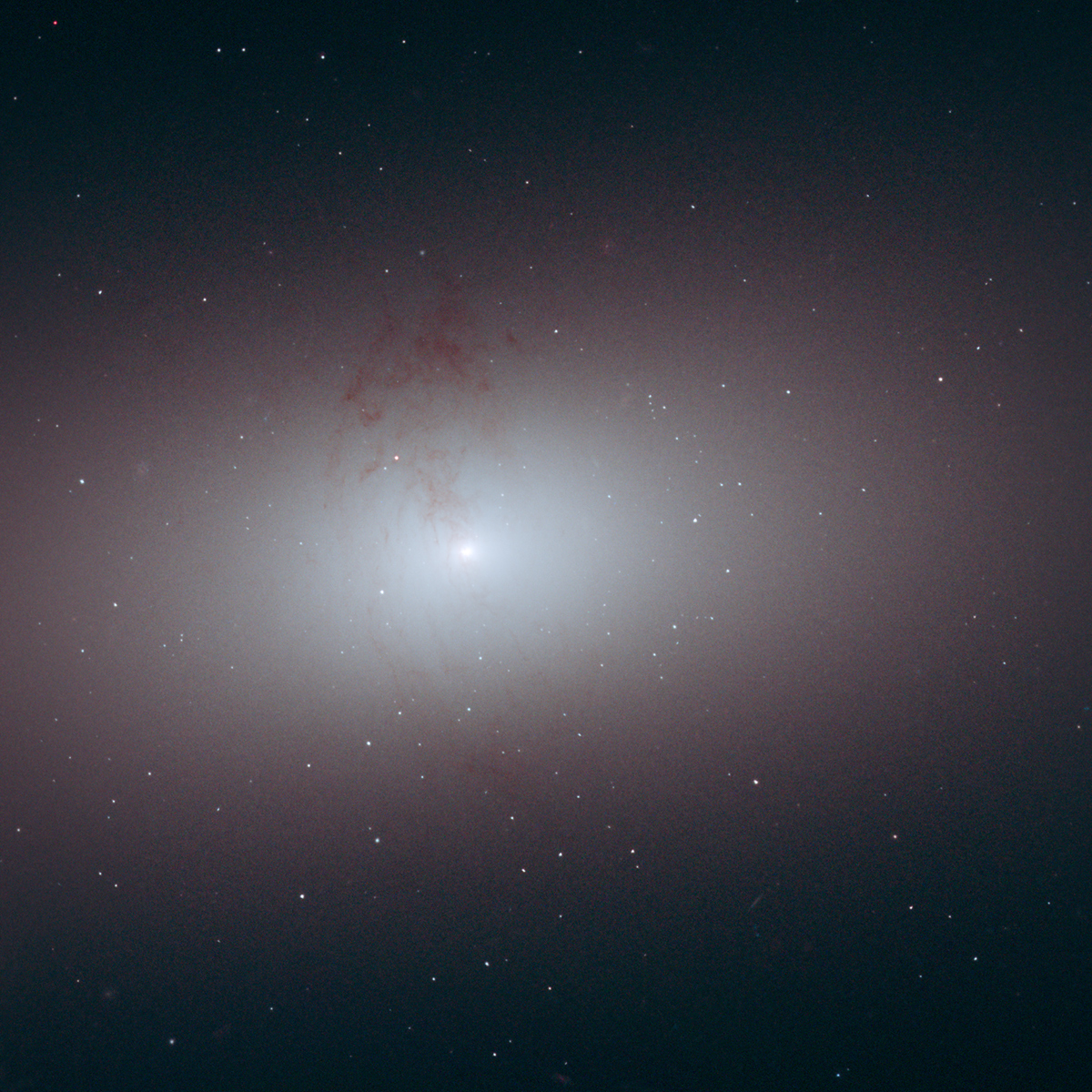
NGC 2768 is a lenticular or elliptical galaxy located approximately 65 million light-years from Earth in the constellation Ursa Major. This Hubble image reveals the galaxy's smooth, featureless stellar envelope characteristic of early-type galaxies, which are dominated by old, evolved stars that give them a warm golden hue. However, NGC 2768 is far from a simple, quiescent stellar system. It harbors a low-luminosity active galactic nucleus powered by a supermassive black hole, and observations have revealed lanes of dust and reservoirs of molecular gas cutting across its smooth stellar body — unusual features for an elliptical galaxy that suggest a past merger event brought fresh material into this otherwise aging stellar population.
Scientific Significance
NGC 2768 is an important object for understanding the complex evolutionary pathways of early-type galaxies, which were once thought to be simple, evolved systems with little ongoing activity. The presence of dust, molecular gas, and a low-luminosity active nucleus challenges the classical picture of elliptical galaxies as red and dead stellar systems. The misaligned dust and gas components provide direct evidence of a past accretion or merger event, demonstrating that elliptical galaxies can acquire fresh interstellar material long after their primary epoch of star formation has ended. NGC 2768's active nucleus, classified as a Low-Ionization Nuclear Emission Region (LINER), represents a mode of black hole activity that may be common in massive galaxies but is still poorly understood.
Observation Details
Hubble observed NGC 2768 using the Wide Field Planetary Camera 2 in broadband optical filters that captured the galaxy's smooth stellar light distribution and the contrasting dark dust features. The high resolution of the WFPC2 was essential for resolving the fine structure of the dust lanes near the galaxy's nucleus, where the dust obscures the background starlight and creates intricate absorption patterns. The observations also provided surface brightness profiles extending from the bright nuclear region out to the faint outer envelope, enabling detailed modeling of the galaxy's stellar mass distribution.
Location in the Universe
Constellation
Ursa Major
Distance from Earth
65 million light-years
Fun Facts
- 1
NGC 2768 contains a supermassive black hole estimated at roughly 200 million solar masses — about 50 times more massive than the black hole at the center of our own Milky Way galaxy.
- 2
Despite being classified as an early-type galaxy typically devoid of gas, NGC 2768 has been detected in radio observations of neutral hydrogen and carbon monoxide, revealing hidden reservoirs of cold molecular gas totaling millions of solar masses.
- 3
The dust lanes crossing NGC 2768's otherwise smooth stellar body are misaligned with the galaxy's main axis of rotation, strongly suggesting they were acquired through a past minor merger with a gas-rich companion galaxy.
Image credit: NASA, ESA, Hubble Space Telescope