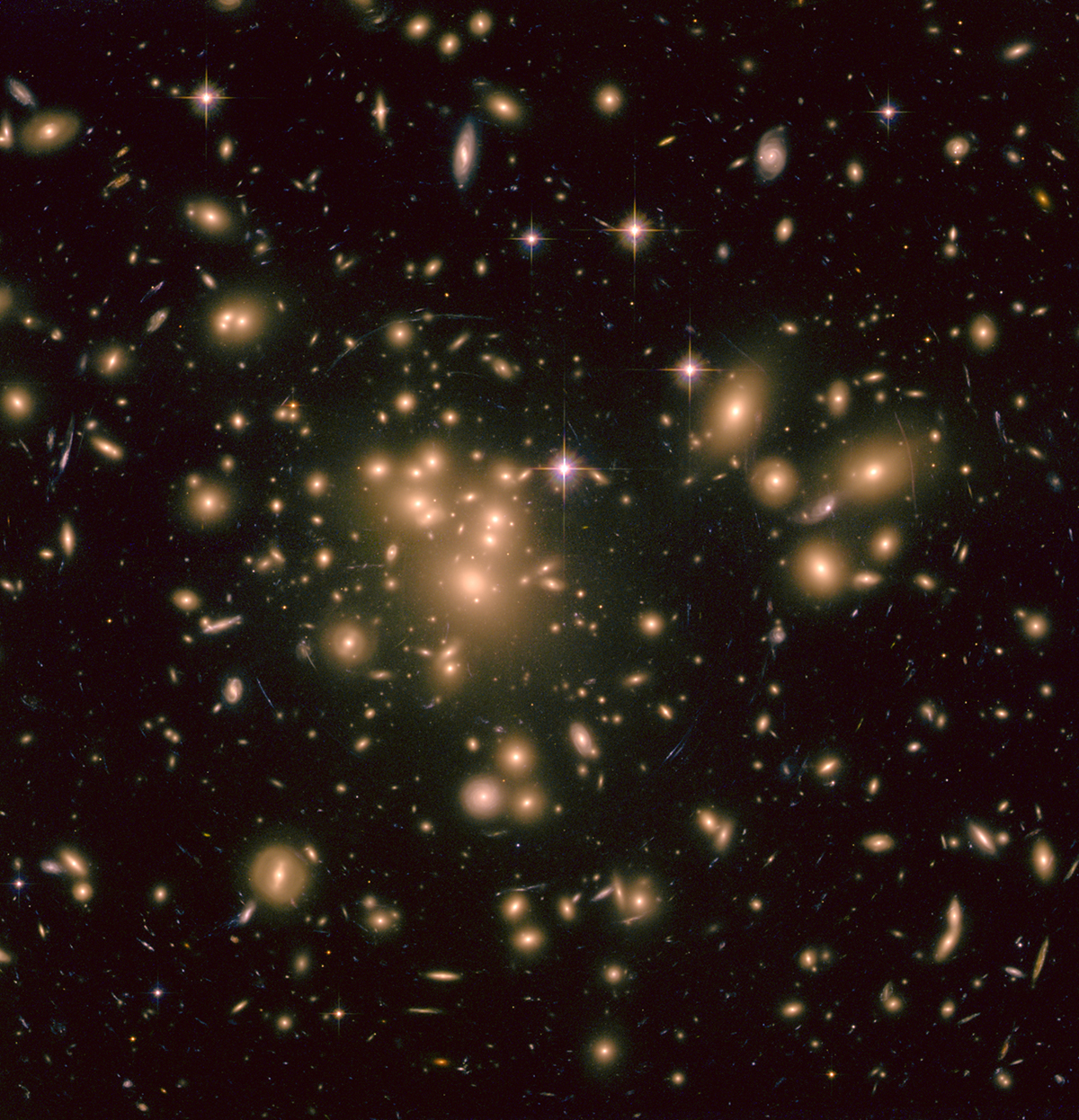
About This Image
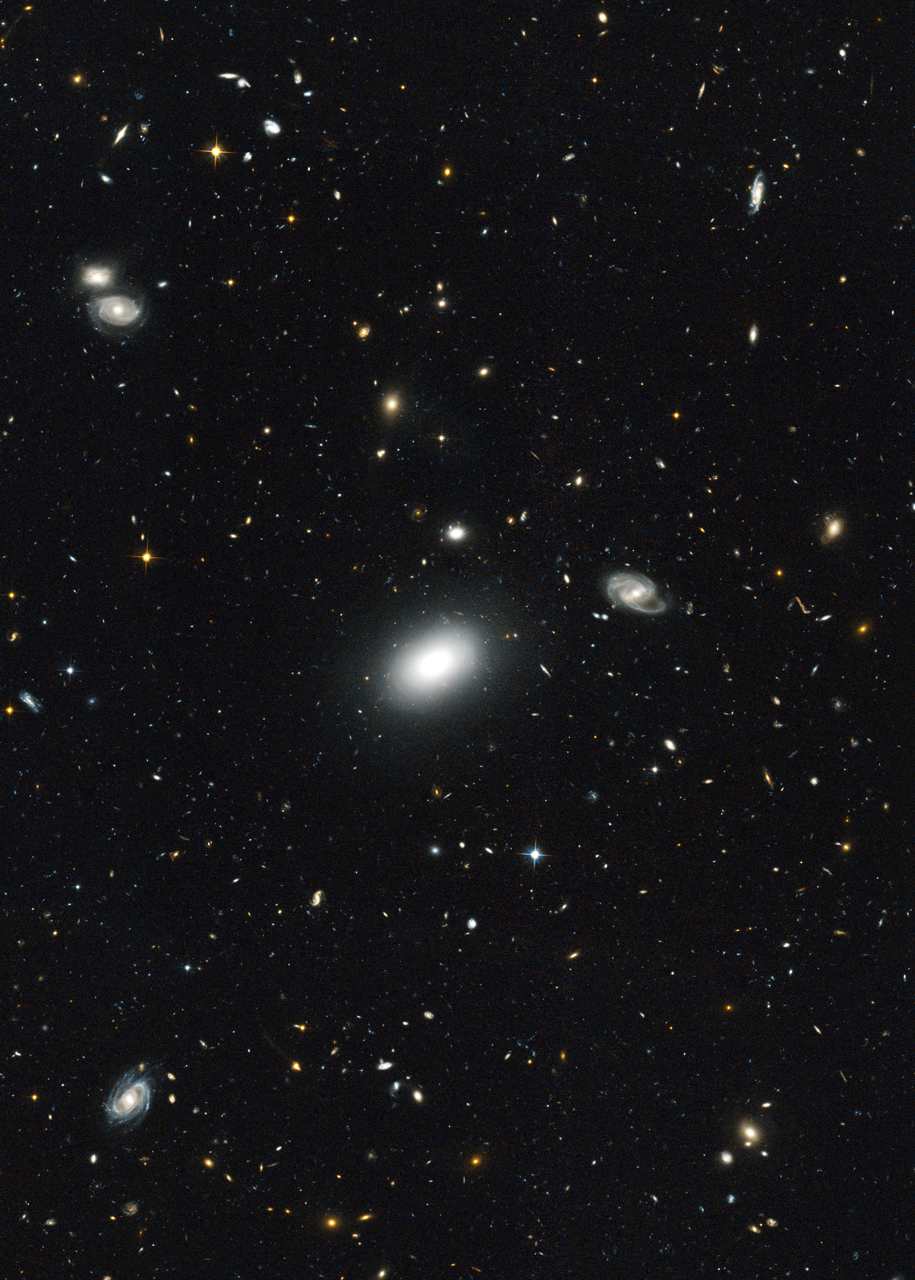
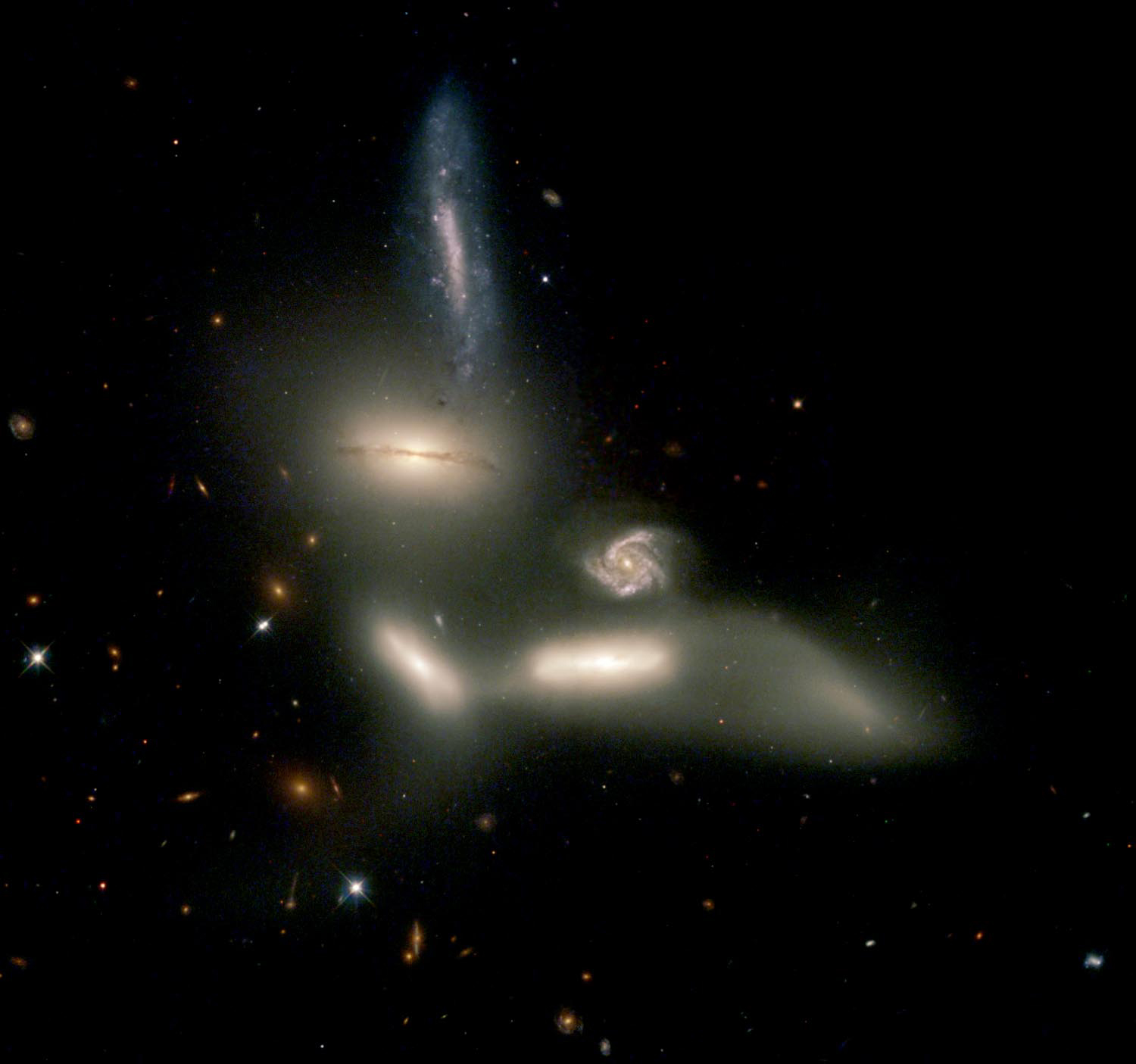
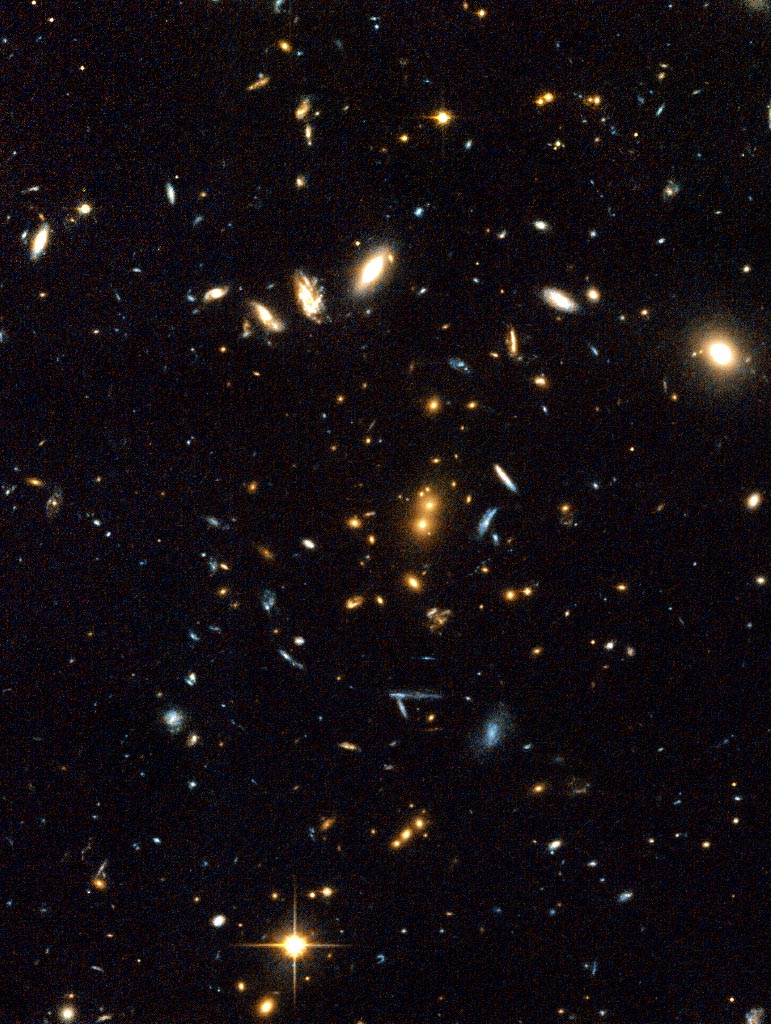
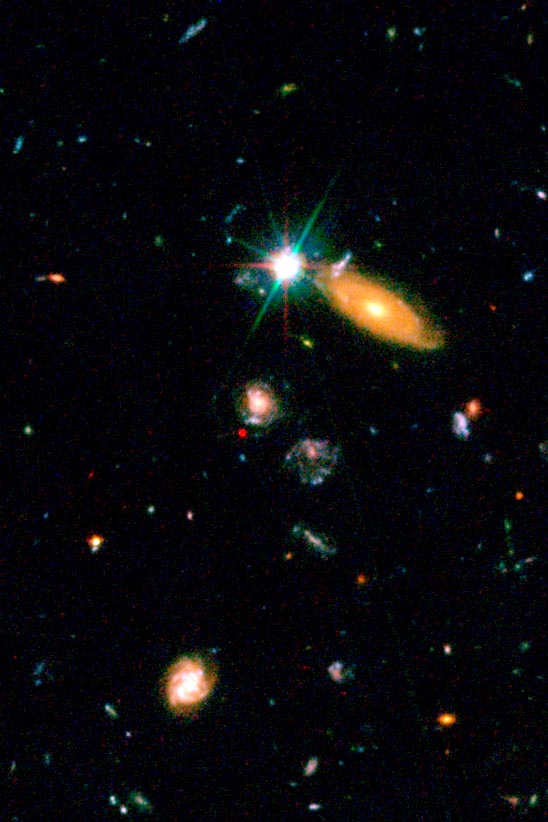
This image shows the inner region of Abell 1689, one of the most massive and densely populated galaxy clusters known, located approximately 2.2 billion light-years away in the constellation Virgo. The cluster's enormous gravitational field warps the fabric of spacetime so severely that it acts as a cosmic telescope, bending and magnifying the light of far more distant galaxies behind it into long, thin arcs visible throughout the image. Astronomers used Hubble's detailed observations to construct one of the most comprehensive maps of dark matter distribution ever produced for a galaxy cluster. The gravitational lensing effect revealed that dark matter is distributed more smoothly and broadly than the visible galaxies, providing critical evidence for understanding how this invisible substance shapes the large-scale architecture of the universe.
Scientific Significance
Abell 1689 has played a pivotal role in advancing our understanding of dark matter distribution and gravitational lensing in the universe. Its extraordinary mass concentration produces some of the most dramatic lensing arcs ever observed, providing astronomers with a natural laboratory for testing general relativity on cosmological scales. By analyzing the precise positions and distortions of background galaxies lensed by the cluster, researchers constructed a detailed mass map revealing that dark matter forms a smooth, extended halo far larger than the visible galaxy population. This finding was instrumental in constraining models of dark matter particle behavior, ruling out certain warm dark matter scenarios that predicted less concentrated distributions. Additionally, Abell 1689 served as one of the first clusters used to detect extremely distant galaxies from the epoch of reionization, when the first stars and galaxies were igniting and transforming the early universe from an opaque fog of neutral hydrogen into the transparent cosmos we observe today.
Observation Details
Hubble observed Abell 1689 using the Advanced Camera for Surveys (ACS) in multiple broadband filters spanning visible and near-infrared wavelengths. The deep imaging campaign required substantial integration times to resolve the faint gravitational arcs stretching behind the cluster core. Hubble's exceptional angular resolution was critical for distinguishing individual lensed galaxy images from the dense foreground cluster population. Complementary observations from the Chandra X-ray Observatory mapped the hot intracluster gas, while ground-based spectroscopy confirmed redshifts for both cluster members and background lensed sources, enabling the full three-dimensional mass reconstruction.
Location in the Universe
Constellation
Virgo
Distance from Earth
2.2 billion light-years
Fun Facts
- 1
Abell 1689 bends the light of background galaxies so strongly that over 100 gravitational arcs have been identified in this single Hubble image, more than in any other known galaxy cluster.
- 2
The cluster acts as a natural cosmic magnifying glass, allowing astronomers to detect galaxies that are up to 10 times fainter than what Hubble could normally see at those extreme distances.
- 3
Abell 1689 contains roughly 250 trillion solar masses of material, yet approximately 80 percent of that mass is invisible dark matter that can only be detected through its gravitational influence on light.
Image credit: NASA, ESA, Hubble Space Telescope