About This Image
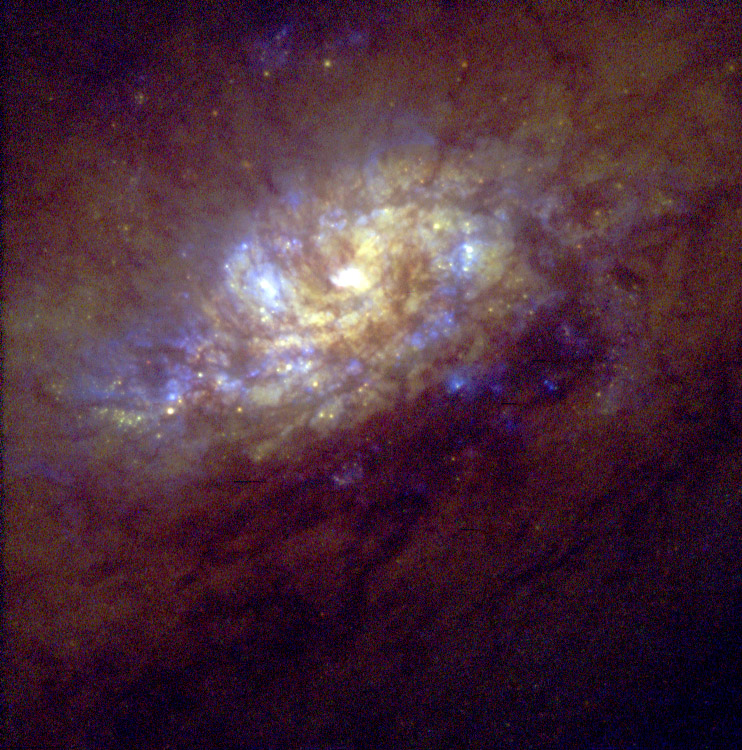
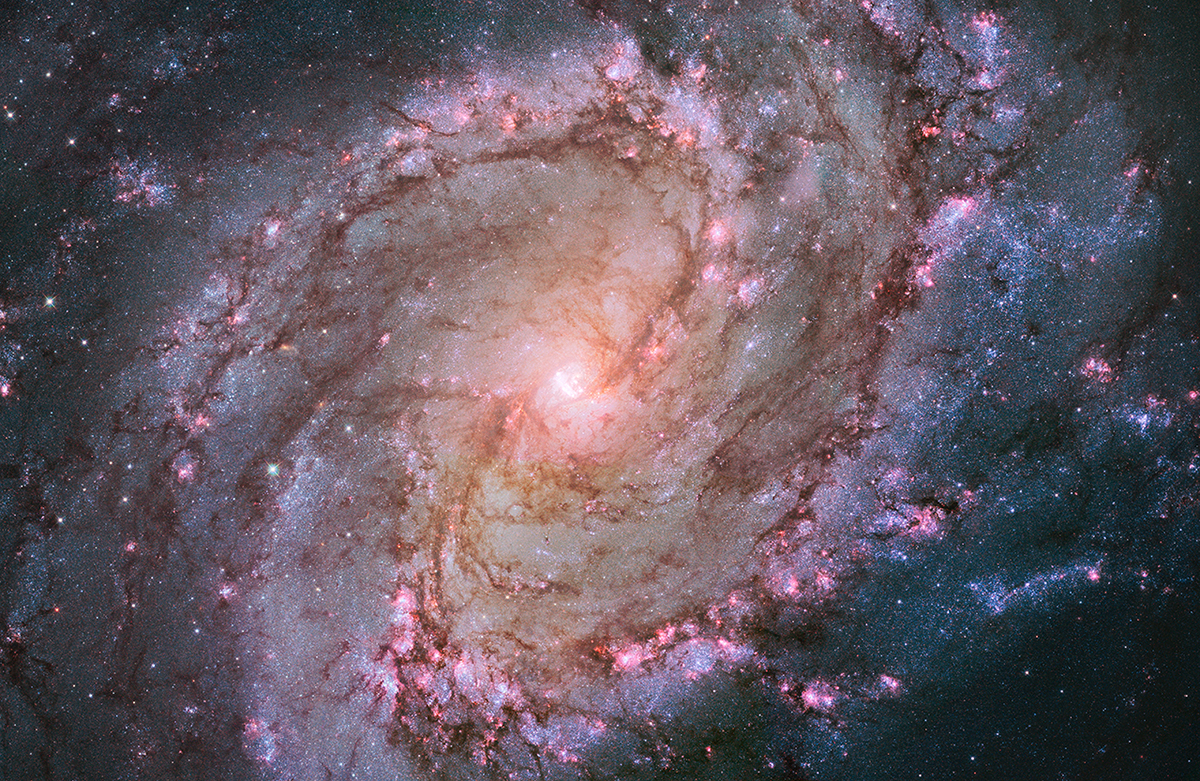
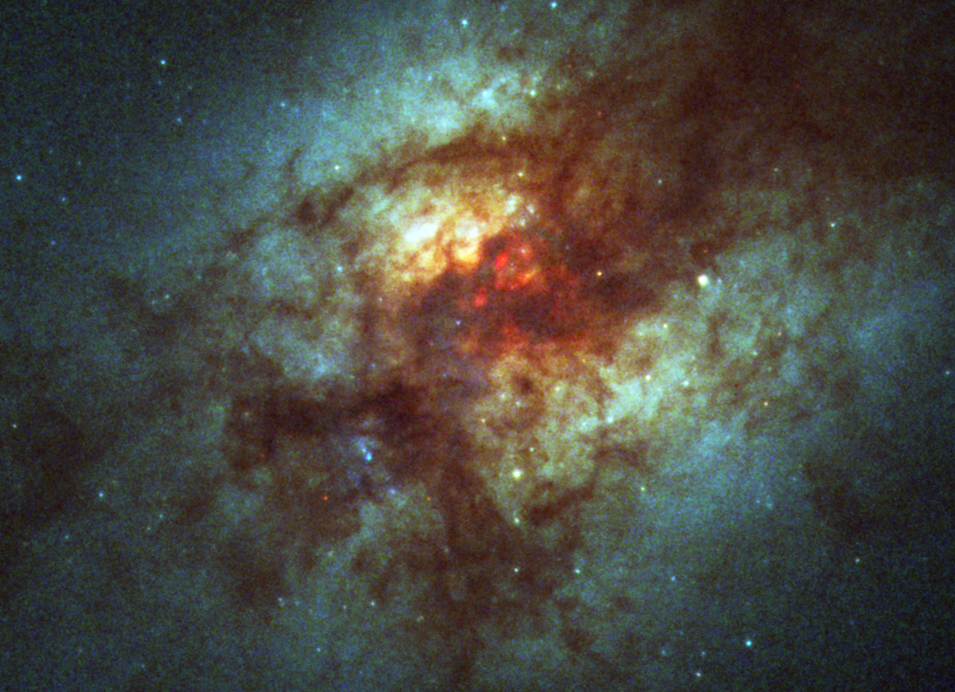
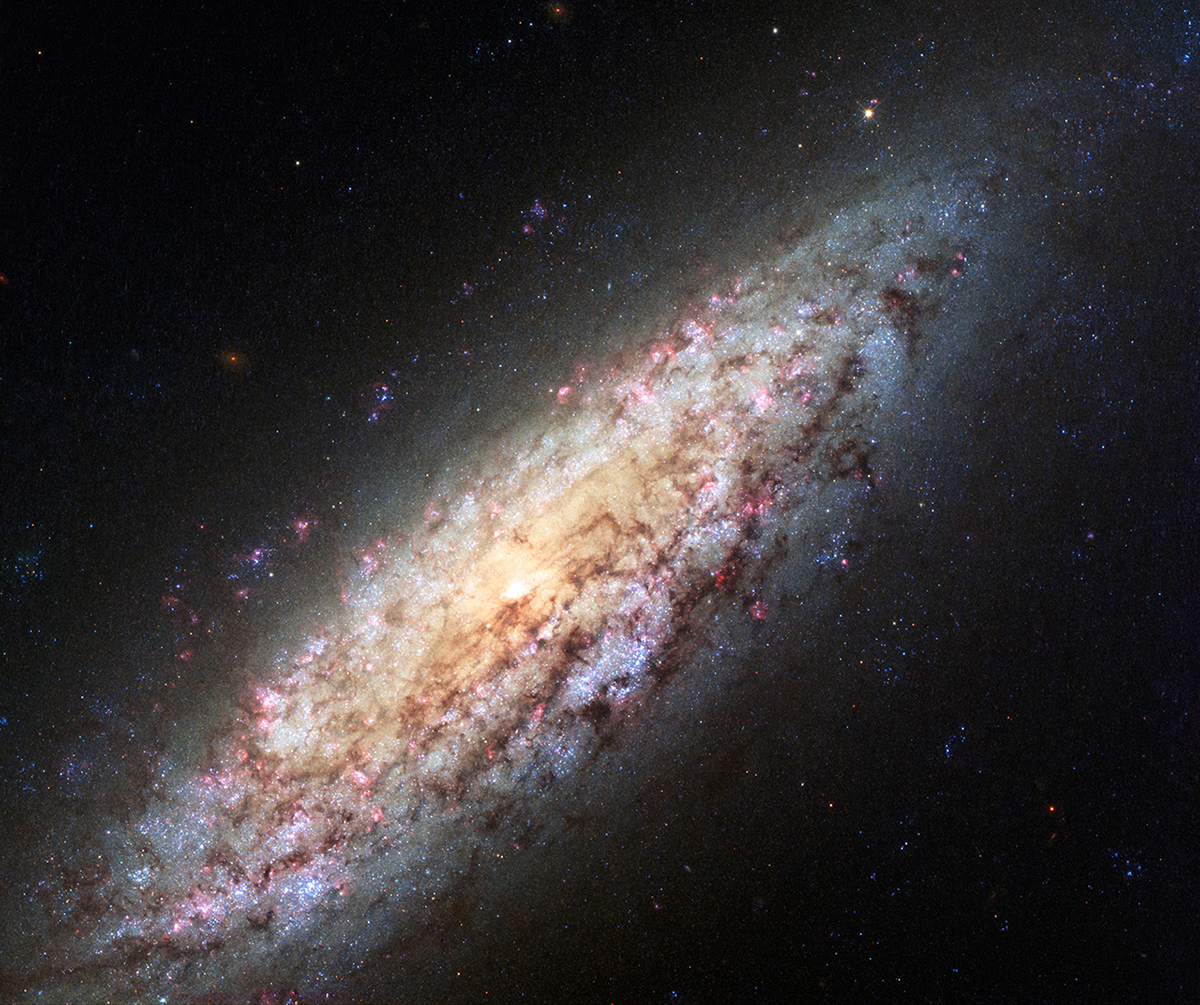
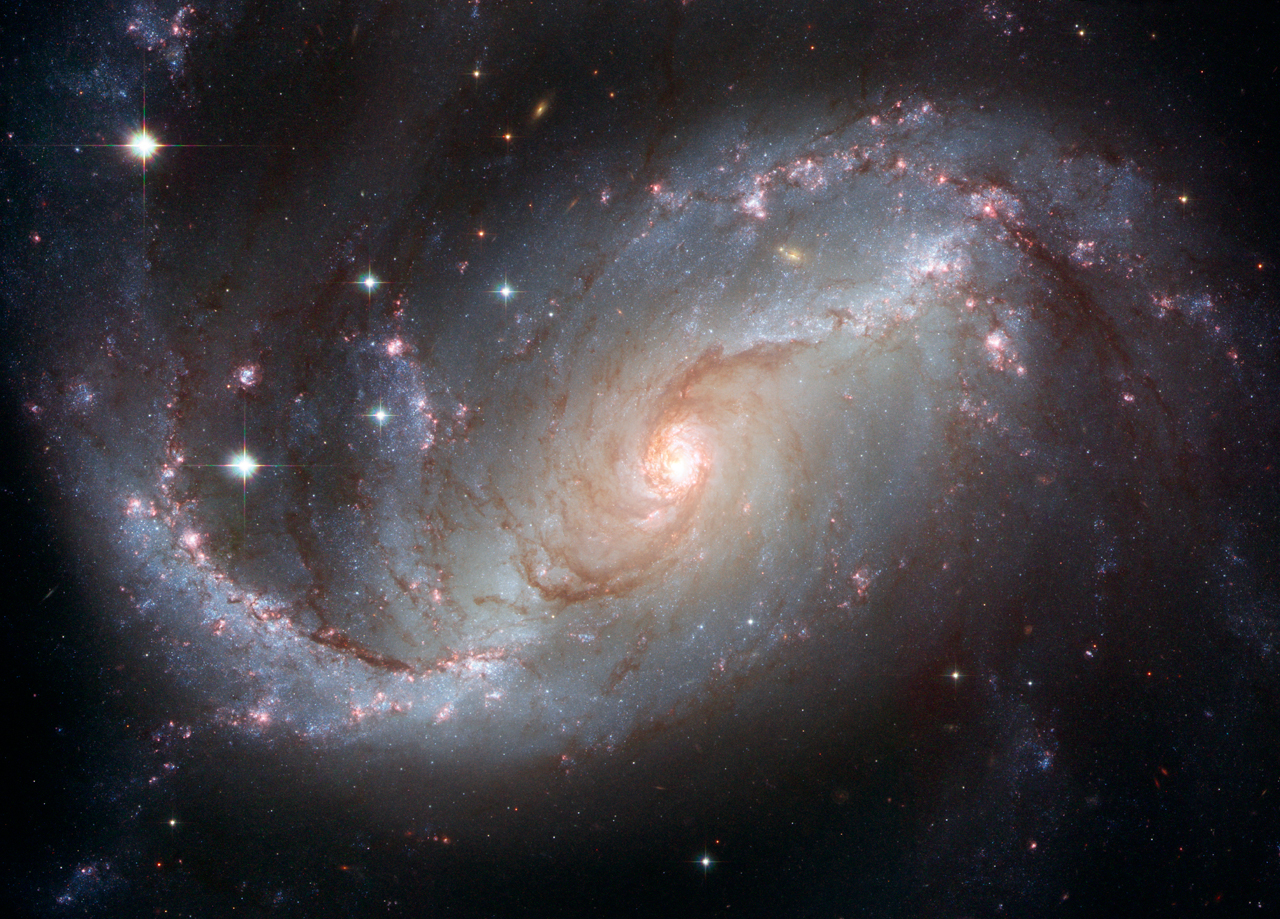
NGC 1672 is a barred spiral galaxy that showcases one of the most striking examples of a stellar bar in the southern sky. Its arms do not twist all the way to the galaxy's center but attach to the ends of a bar of stars that extends from the nucleus. This prominent central bar channels gas and dust toward the galaxy's core, fueling intense star formation activity. Clusters of hot, young, blue stars form along the spiral arms, while surrounding clouds of hydrogen gas glow red with the characteristic emission of ionized hydrogen. The galaxy's well-defined structure makes it an ideal laboratory for studying how bars influence galactic evolution and star formation patterns across cosmic time.
Scientific Significance
NGC 1672 serves as a textbook example for understanding how galactic bars influence the evolution of spiral galaxies. The bar structure acts as a cosmic conveyor belt, funneling gas from the outer disk toward the central regions, where it triggers bursts of star formation and feeds the active galactic nucleus. Observations of NGC 1672 have helped astronomers understand the relationship between bar strength and nuclear activity, revealing that bars can both enhance and suppress star formation depending on the gas dynamics involved. The galaxy's relatively face-on orientation provides an unobstructed view of its spiral arm structure, allowing detailed studies of how stars form in the high-density environments where spiral arms connect to the bar ends. NGC 1672 has been observed across multiple wavelengths from radio to X-ray, building a comprehensive picture of the physical processes at work in barred spiral systems.
Observation Details
Hubble observed NGC 1672 using the Advanced Camera for Surveys (ACS) in multiple optical filters, capturing both the blue light from young stellar populations and the red emission from ionized hydrogen gas in star-forming regions. The observations revealed intricate dust lanes threading through the bar and spiral arms, as well as numerous bright star clusters marking sites of recent star formation. The image combines data from blue, green, and infrared filters to create a natural-color composite that highlights the contrast between old stellar populations in the bar and young stars in the spiral arms. Ground-based observations complemented Hubble's view by providing spectroscopic data on the gas kinematics throughout the galaxy.
Location in the Universe
Constellation
Dorado
Distance from Earth
60 million light-years
Fun Facts
- 1
NGC 1672's central bar is approximately 50,000 light-years long — about half the diameter of the entire Milky Way galaxy.
- 2
The galaxy hosts an active galactic nucleus classified as a Seyfert type 2, indicating its supermassive black hole is actively consuming material and emitting powerful radiation.
- 3
Barred spiral galaxies like NGC 1672 represent about two-thirds of all spiral galaxies in the universe, making this structure the rule rather than the exception.
Image credit: NASA, ESA, Hubble Space Telescope