About This Image
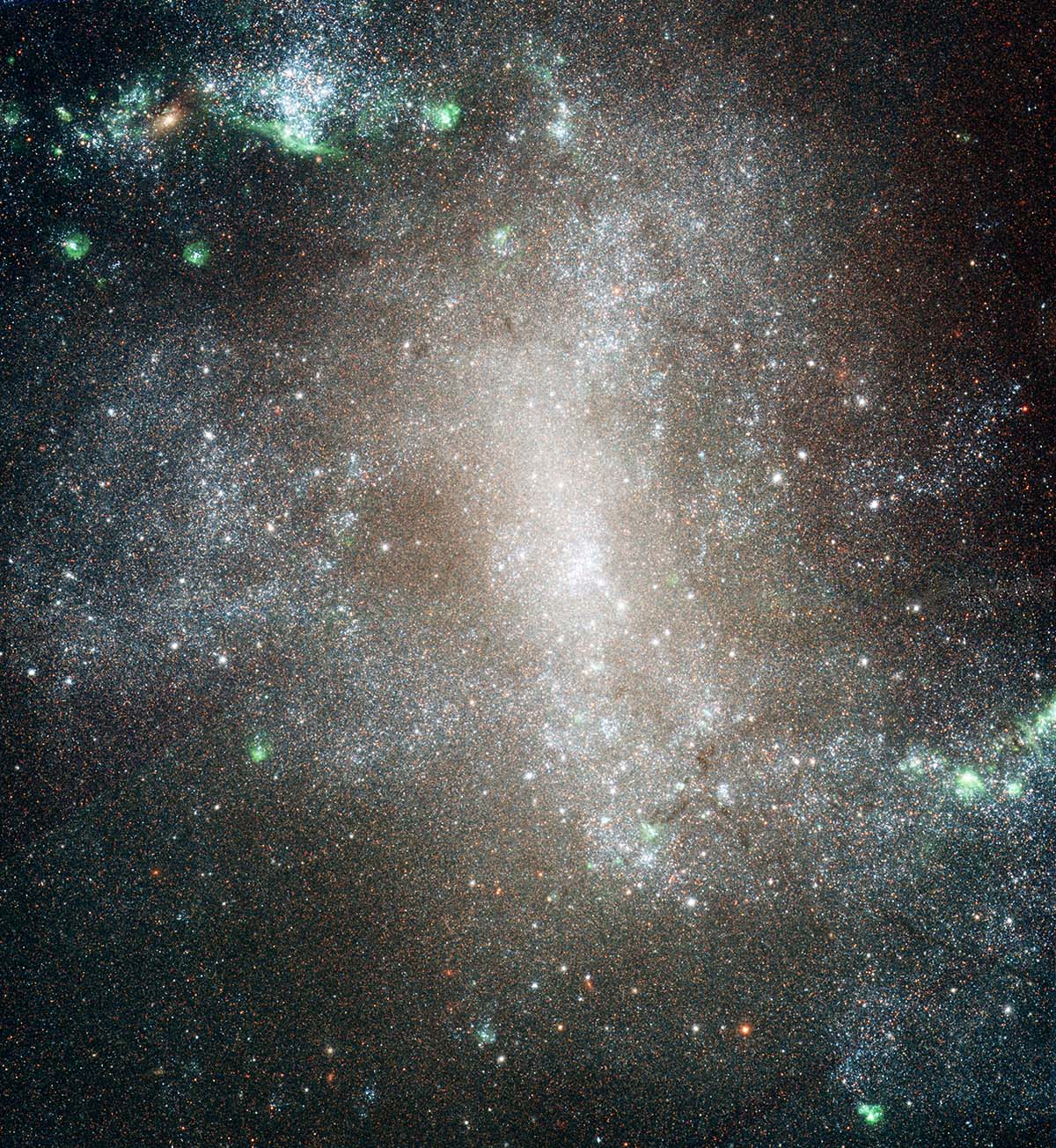
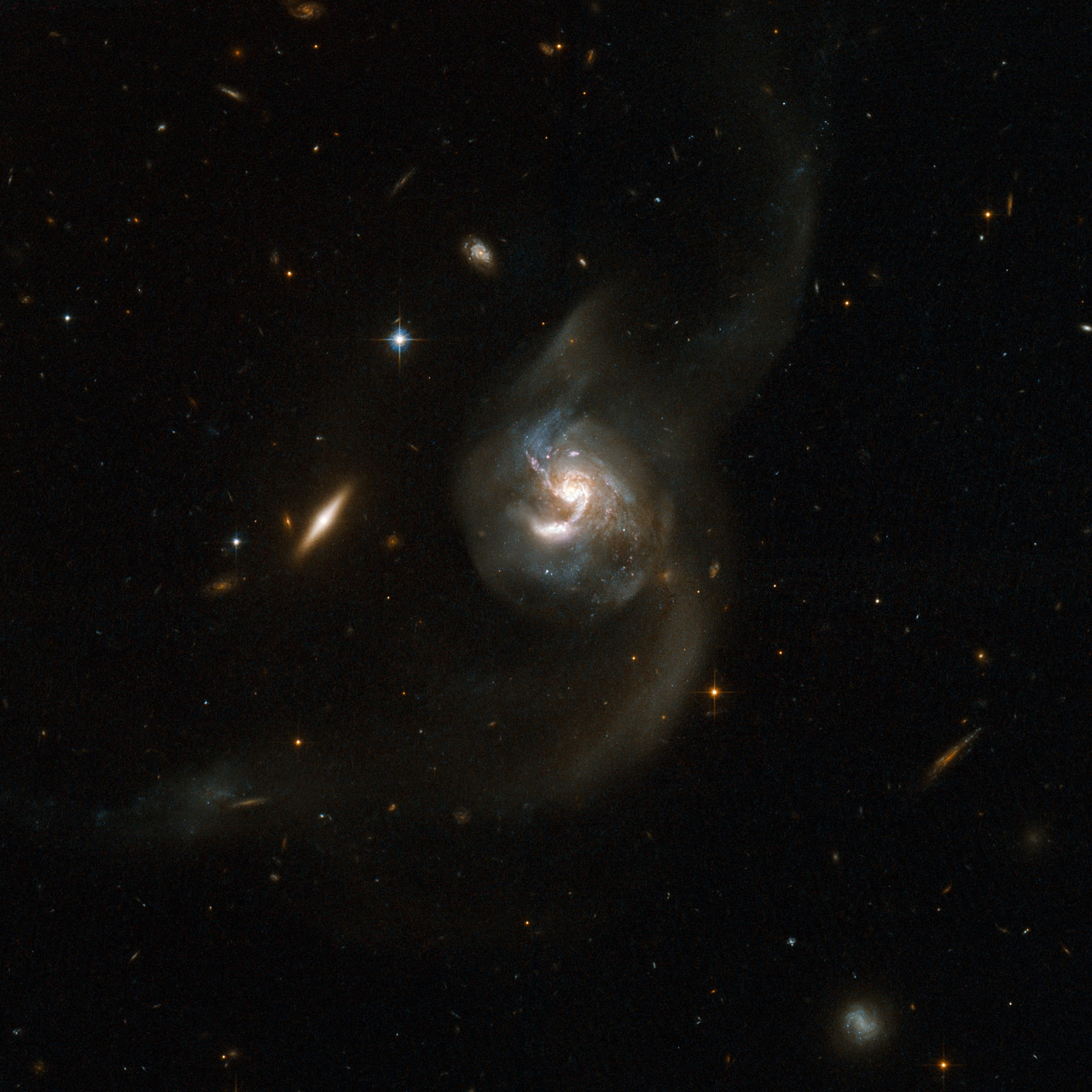
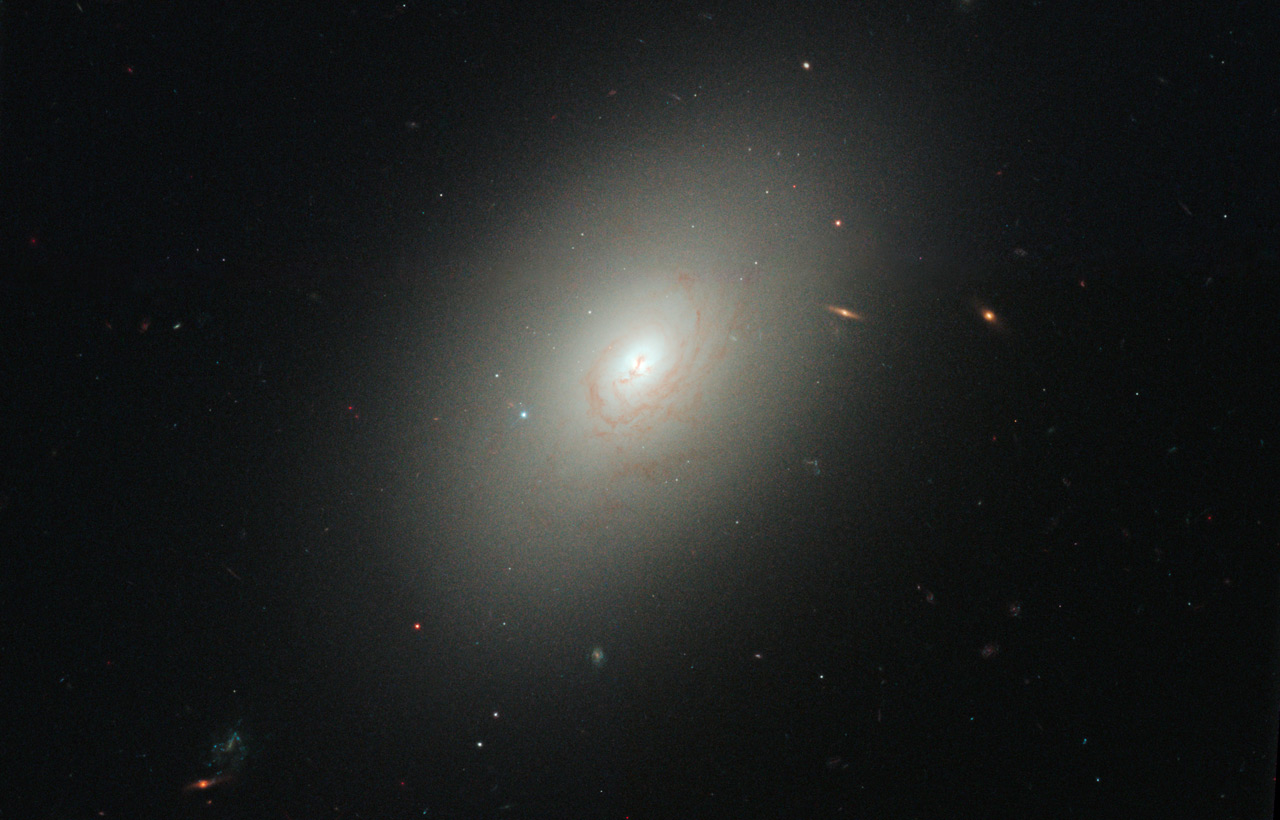
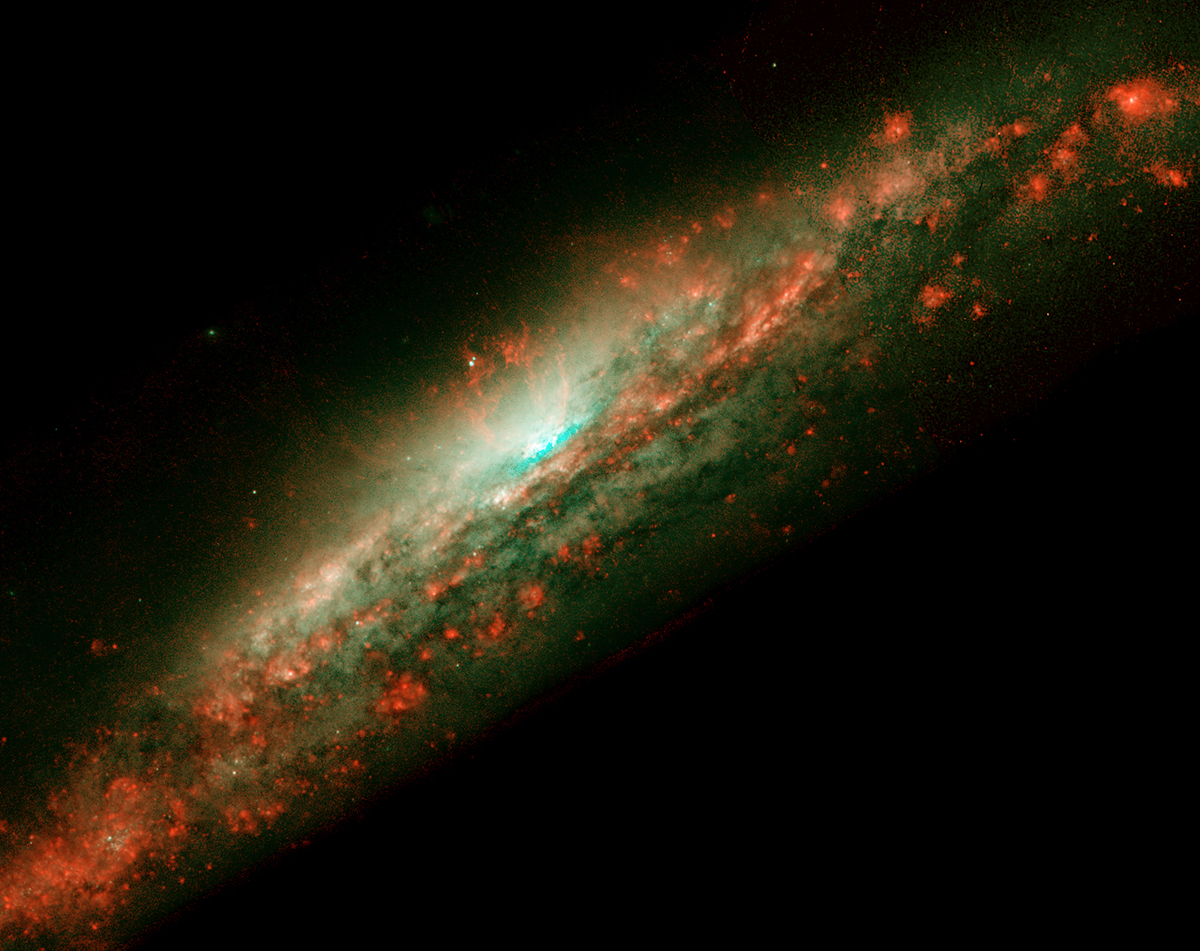
This dramatic image reveals extraordinary activity within the core of NGC 3079, a spiral galaxy where a massive bubble of superheated gas is erupting from the galactic center like a cosmic geyser. This spectacular superbubble spans more than 3,000 light-years in diameter and rises 3,500 light-years above the galaxy's disk — a structure so vast it would stretch across roughly one-third of the distance between our Sun and the nearest star. The bubble is inflated by the combined energy of numerous supernova explosions and powerful stellar winds from massive young stars concentrated in the galaxy's nuclear starburst region. As this hot gas expands and breaks through the galactic disk, it carries heavy elements synthesized in stellar interiors into the intergalactic medium, enriching the space between galaxies with the building blocks of future planets and life.
Scientific Significance
NGC 3079 provides one of the most dramatic nearby examples of a galactic wind — an outflow of hot gas driven by concentrated energy release in a galaxy's nucleus. Understanding galactic winds is crucial because they regulate galaxy evolution by expelling gas that would otherwise form new stars, while simultaneously enriching the intergalactic medium with heavy elements. The superbubble in NGC 3079 is powered by both a central starburst — a concentration of massive stars and their supernova explosions — and an active galactic nucleus fed by the central supermassive black hole. Disentangling the relative contributions of star formation and black hole activity to galactic outflows is a major challenge in extragalactic astrophysics. NGC 3079's edge-on orientation makes the vertical extent of the superbubble clearly visible, allowing direct measurement of outflow velocities and mass loss rates. These observations reveal that galaxies can eject significant fractions of their gas content into intergalactic space, fundamentally affecting their subsequent evolution.
Observation Details
Hubble observed NGC 3079 using the Wide Field Planetary Camera 2 (WFPC2) with filters that emphasized ionized hydrogen and other emission lines from the hot gas. The narrowband imaging revealed the detailed structure of the superbubble, including filaments and shells that trace the expansion front. Complementary X-ray observations from the Chandra telescope mapped the hottest gas within the bubble, while radio observations traced synchrotron emission from relativistic particles accelerated in the outflow. The multi-wavelength picture reveals a complex outflow structure with multiple temperature and velocity components.
Location in the Universe
Constellation
Ursa Major
Distance from Earth
50 million light-years
Fun Facts
- 1
The superbubble in NGC 3079 is filled with gas heated to temperatures of millions of degrees, so hot that it emits X-rays detectable by space telescopes.
- 2
NGC 3079 also hosts a supermassive black hole at its center that is actively accreting material, adding even more energy to drive the outflow.
- 3
Similar but much smaller superbubbles exist in our own Milky Way galaxy, though none approach the enormous scale of NGC 3079's central eruption.
Image credit: NASA, ESA, Hubble Space Telescope