About This Image
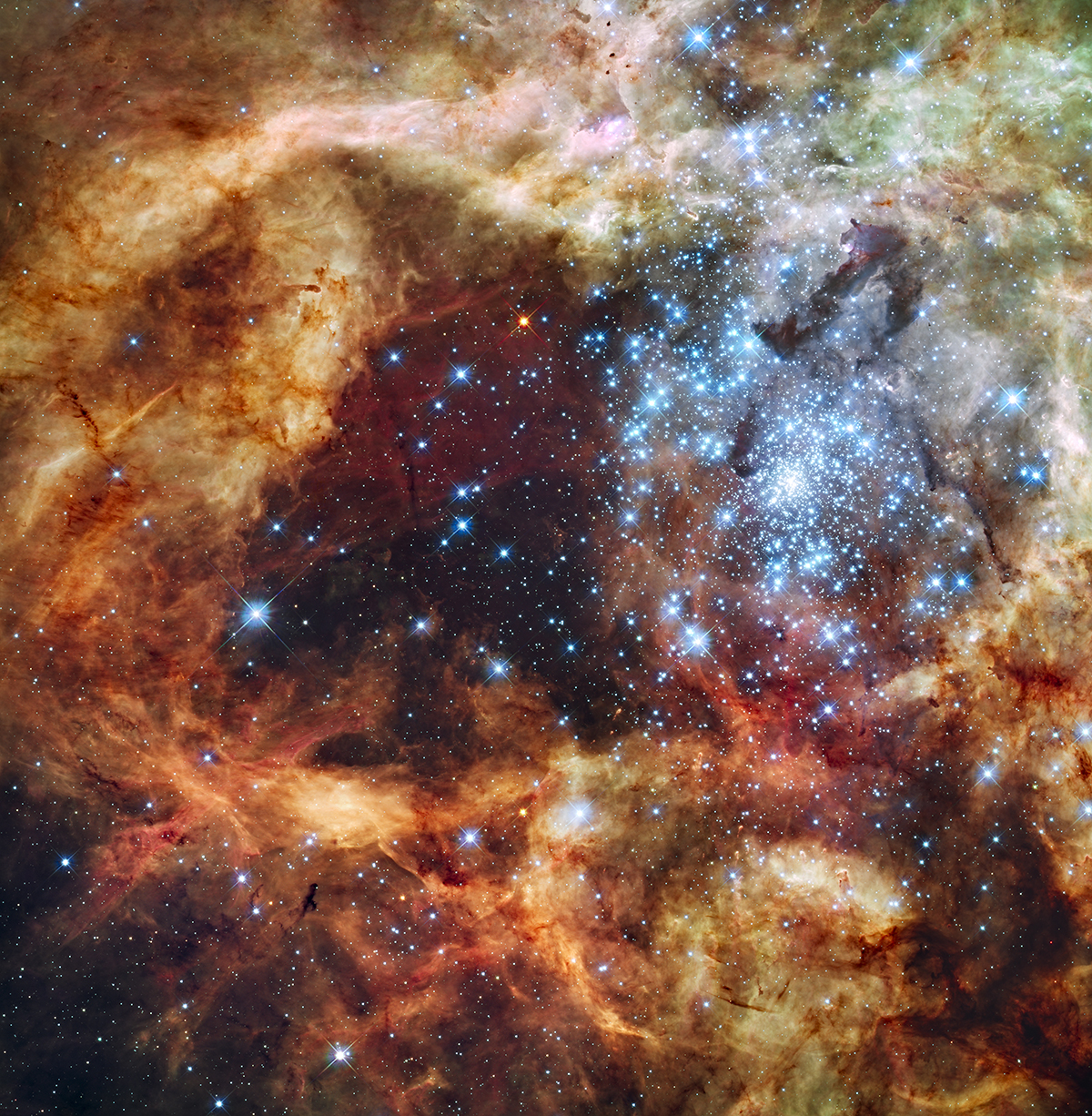
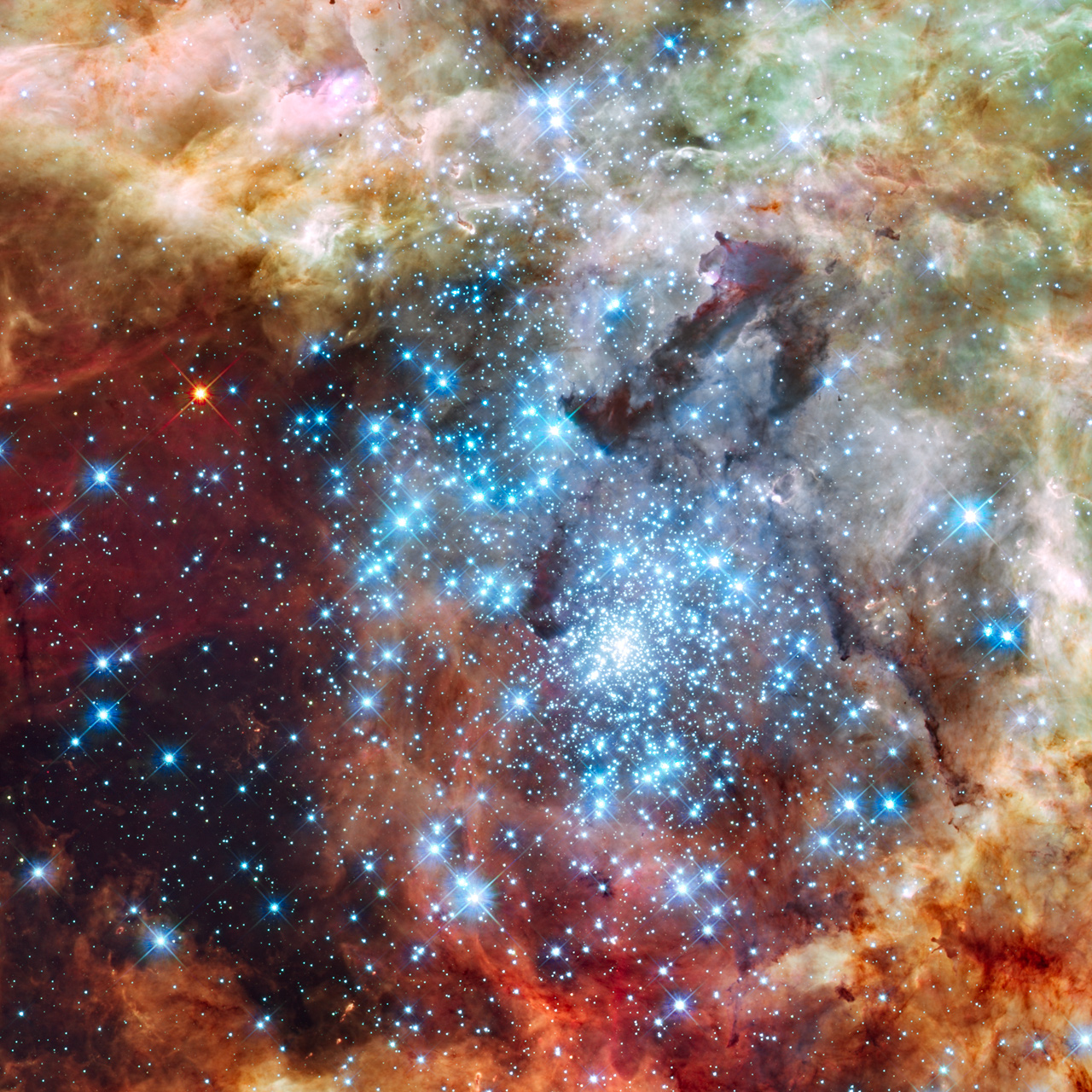
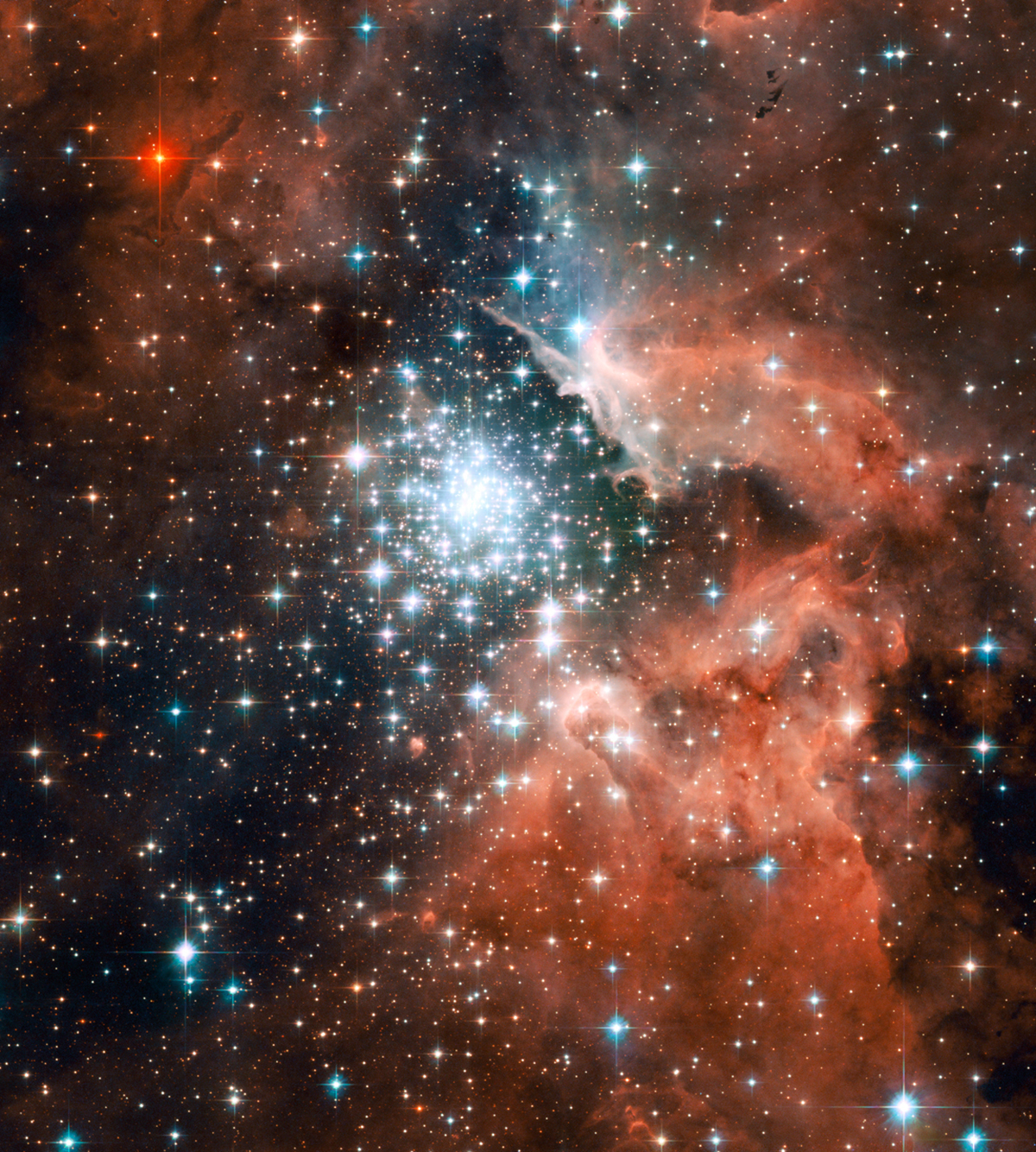
In NGC 3603, thousands of sparkling, young stars are nestled within a giant nebula. This stellar "jewel box" is one of the most massive young star clusters in our Milky Way galaxy.
Scientific Significance
NGC 3603 is critical for studying massive-star feedback and clustered star formation. It shows how radiation and winds regulate gas collapse and trigger or suppress future star birth nearby.
Observation Details
Hubble observed the field with broadband and emission-line filters, resolving dense stellar concentrations and ionized gas fronts at high spatial detail.
Location in the Universe
Constellation
Carina
Distance from Earth
20,000 light-years
Fun Facts
- 1
NGC 3603 contains some of the most massive young stars in the Milky Way.
- 2
Powerful stellar radiation sculpts surrounding gas into ridges and cavities.
- 3
It is often used as a nearby analog to starburst regions in distant galaxies.
Image credit: NASA, ESA, Hubble Space Telescope