About This Image
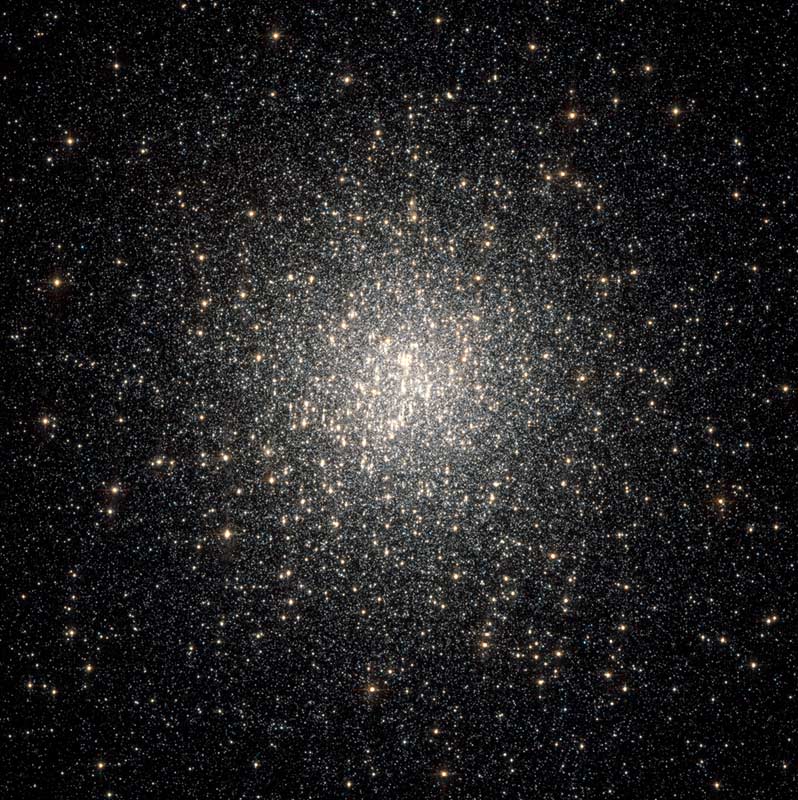
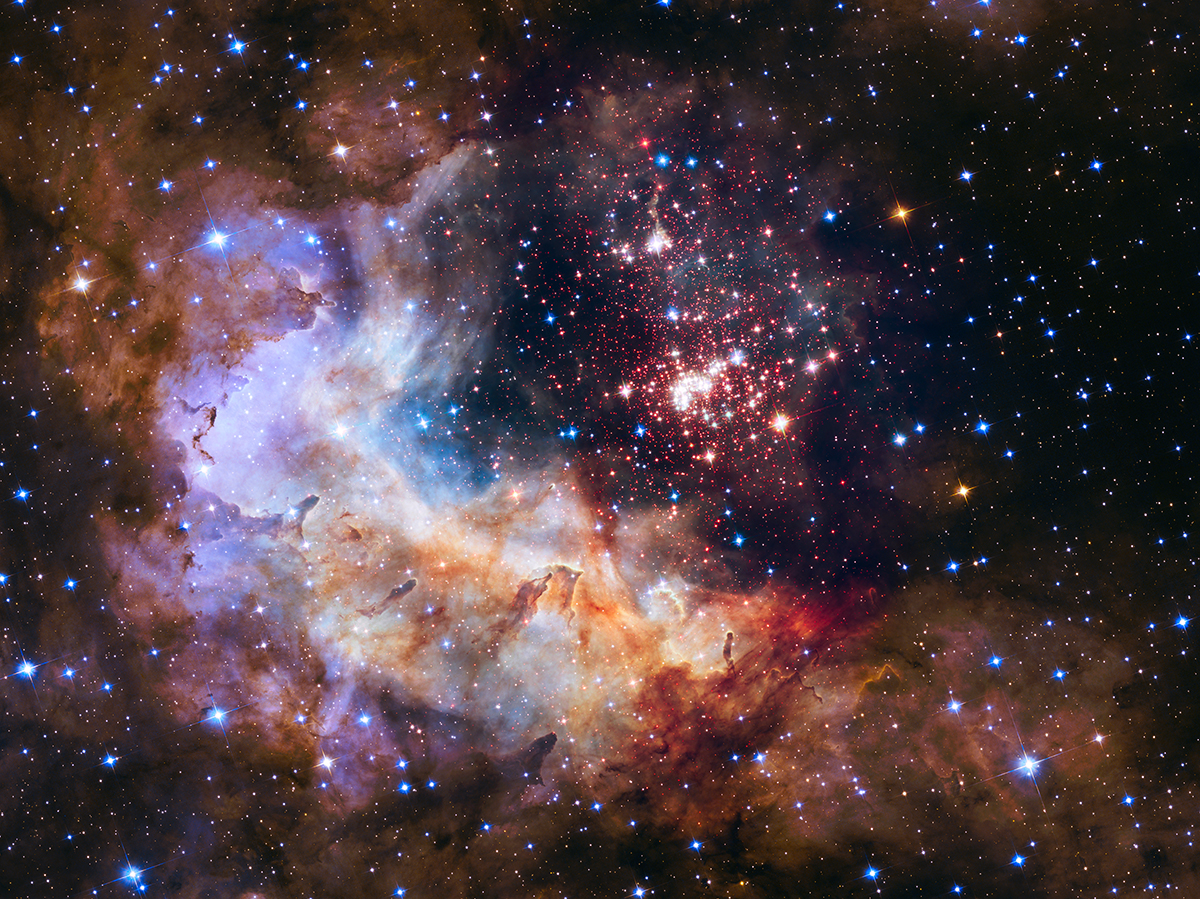
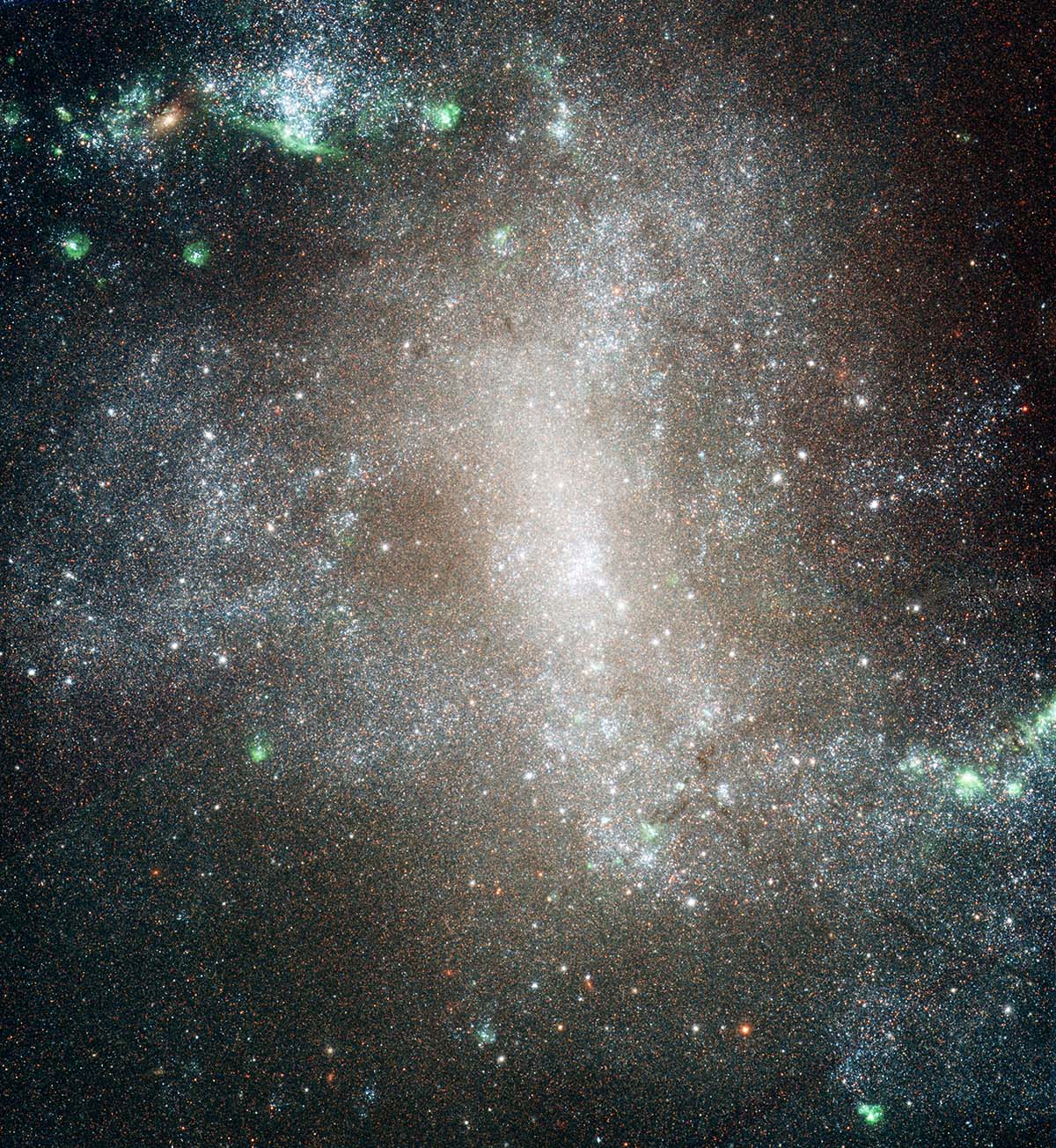
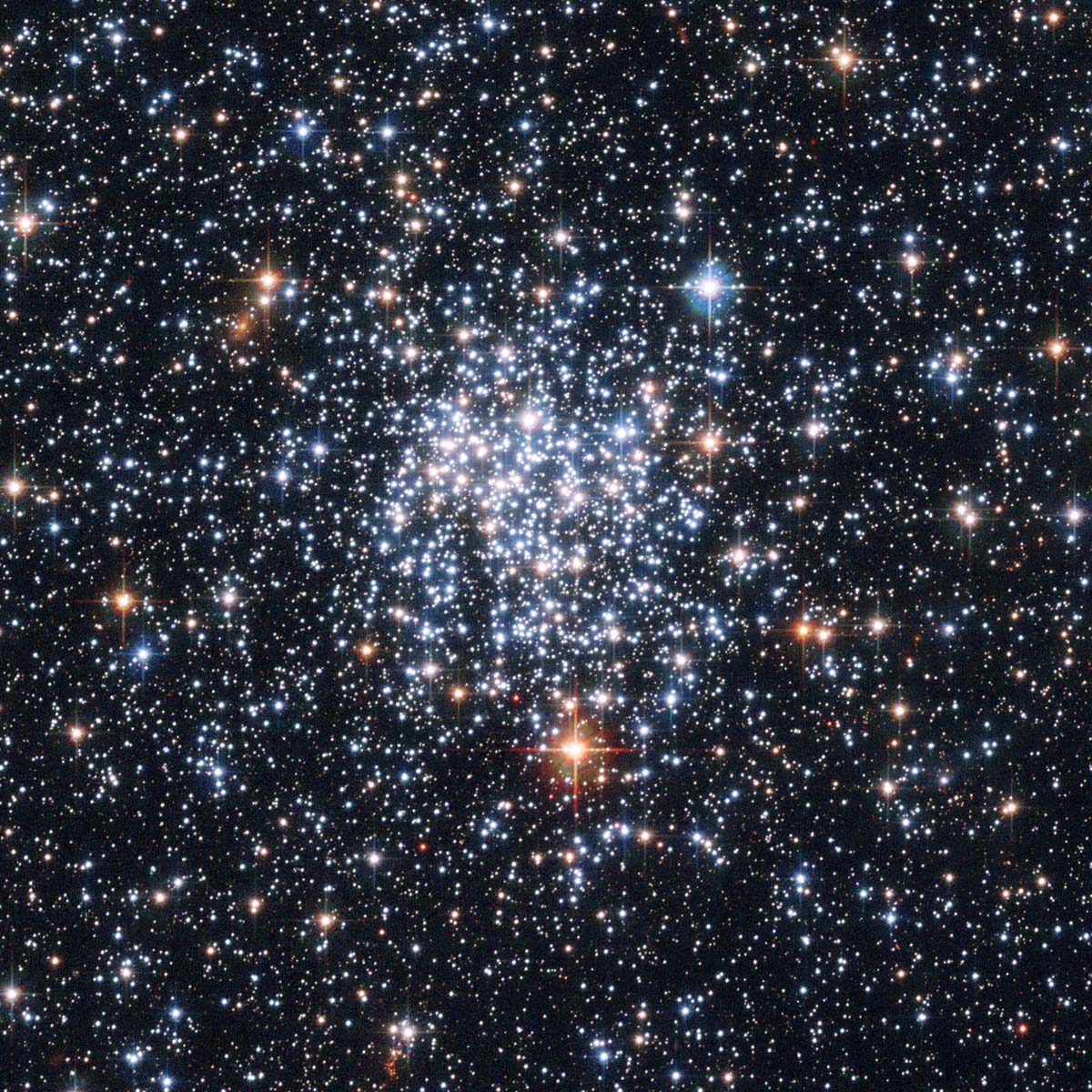
This glittering swarm of stars is NGC 265, a young open star cluster residing in the Small Magellanic Cloud — one of the Milky Way's closest galactic neighbors. The cluster's brilliant blue stars indicate its relative youth, as the most luminous blue stars burn through their fuel rapidly and would have long since expired in an older stellar population. NGC 265 provides astronomers with a remarkable opportunity to study star formation and stellar evolution in an environment quite different from our own galaxy. The Small Magellanic Cloud has a lower abundance of heavy elements than the Milky Way, mimicking conditions that were more common in the early universe. By studying how stars form and evolve in this 'low-metallicity' environment, astronomers gain insights into the stellar populations that dominated galaxies when the universe was young.
Scientific Significance
NGC 265 serves as a critical testbed for stellar evolution theory in low-metallicity environments. Because the Small Magellanic Cloud has lower heavy element abundances than the Milky Way, stars in NGC 265 provide observational constraints on how stellar properties — luminosity, temperature, lifetime, and mass loss — depend on chemical composition. These dependencies are crucial for interpreting observations of distant galaxies where direct resolution of individual stars is impossible. The cluster's well-determined distance (inherited from the SMC's distance) eliminates one of the major uncertainties in stellar astrophysics, enabling precise comparisons between theoretical models and observed color-magnitude diagrams. Studies of NGC 265 have revealed that stellar evolution proceeds somewhat differently at low metallicity, with stars being slightly hotter and more luminous than their metal-rich counterparts of the same mass. The cluster also contributes to our understanding of the star formation history of the Small Magellanic Cloud, which has experienced episodes of enhanced star formation triggered by interactions with the Large Magellanic Cloud and the Milky Way.
Observation Details
Hubble observed NGC 265 using the Advanced Camera for Surveys (ACS) in multiple broadband filters spanning blue through red wavelengths. The observations resolved thousands of individual stars within the cluster, enabling construction of detailed color-magnitude diagrams that reveal the distribution of stellar masses, ages, and evolutionary states. The high angular resolution of ACS was essential for separating closely spaced stars in the cluster's crowded central regions. The known distance to the SMC (approximately 200,000 light-years) allowed direct conversion of apparent magnitudes to absolute luminosities, facilitating comparison with theoretical stellar evolution models.
Location in the Universe
Constellation
Tucana (Small Magellanic Cloud)
Distance from Earth
200,000 light-years
Fun Facts
- 1
NGC 265 is located in a satellite galaxy of the Milky Way, making it one of the few star clusters we can study that exists entirely outside our own galaxy.
- 2
The Small Magellanic Cloud has only about one-quarter the heavy element content of the Milky Way, meaning stars in NGC 265 formed from more chemically primitive material.
- 3
Young clusters like NGC 265 are often called 'stellar laboratories' because all their stars formed at roughly the same time and distance, allowing precise comparisons.
Image credit: NASA, ESA, Hubble Space Telescope